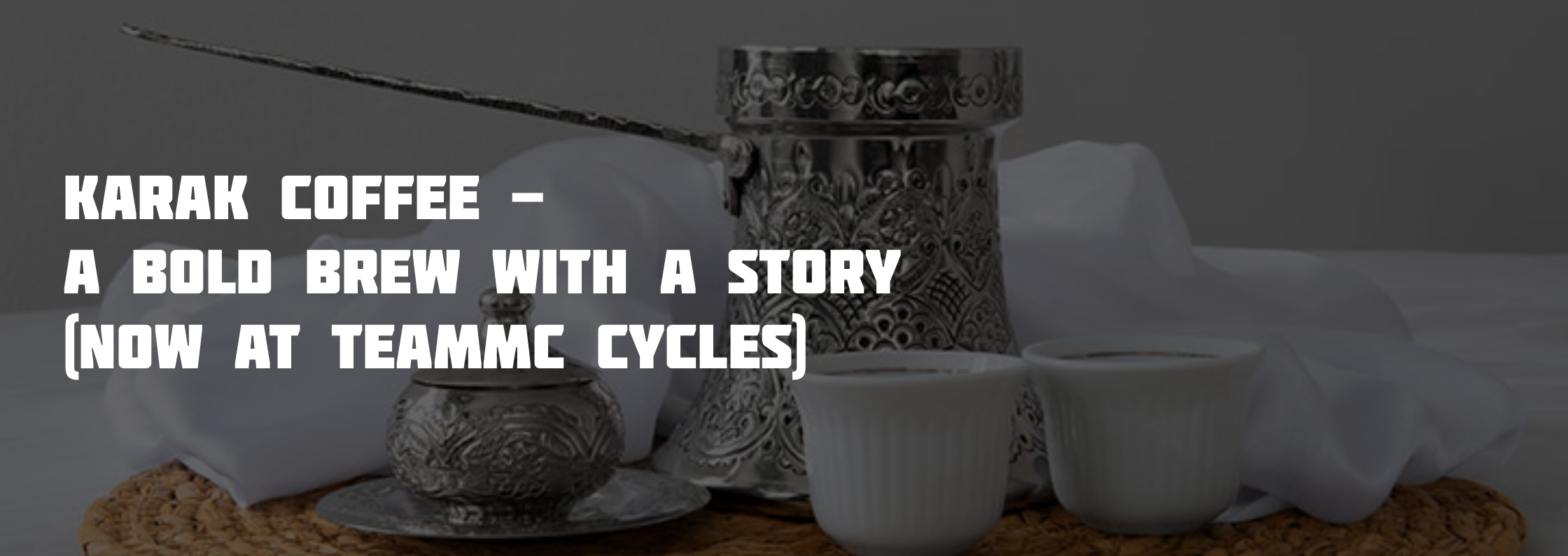
Karak Coffee – A Bold Brew with a Story (Now at TEAMMC Cycles)

There’s something quietly magical about that first sip of karak coffee. The aroma of cardamom rising in a warm cloud, the earthy notes of lightly roasted beans, the subtle sweetness that lingers as the liquid gold rolls over your tongue. It’s a brew steeped in history, ritual, and – most importantly – community.

At TEAMMC Cycles, we’re known for three passions: bikes, coffee and community. While our rides fuel the body, our cycle café fuels the spirit and nurtures community. And now, we’re proud to serve karak coffee – a drink that’s as bold and enduring as the cyclists who gather here. But what makes karak coffee so special? And why has it captured hearts from the Arabian deserts to the bustling streets of Karachi – and now, your favourite cycle café?

Pull up a chair, and let’s pour you a story.
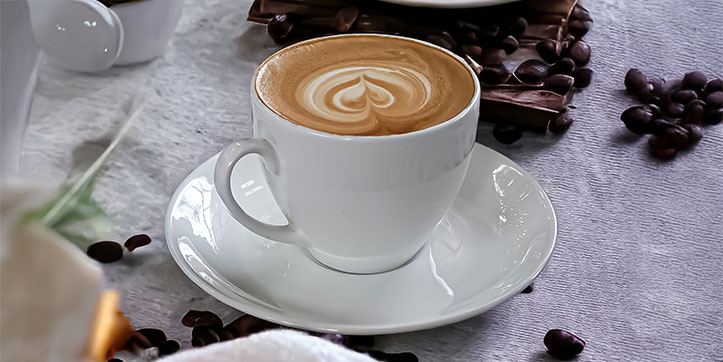
Karak coffee with cardamom

What Is Karak Coffee? A Sip of Strength

The word karak comes from Hindi and means “strong” or “hard.” True to its name, this is no timid latte. Karak is a spiced, robust brew that stands apart for its intensity of flavour and its cultural significance.

Often confused with chai because of its use of spices, karak coffee is in fact a very different drink. At its heart lies coffee – lightly roasted, coarsely ground Arabica beans brewed slowly with a fragrant blend of cardamom, cloves, and sometimes saffron. Milk is optional, but when added, it’s just enough to soften the edges without muting the brew’s boldness.
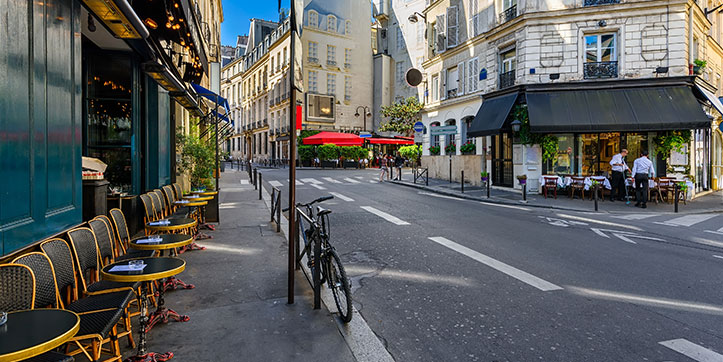

street cafe

From Desert Tents to Cycle Cafés: The Origins of Karak

To understand karak coffee, we journey back to the windswept deserts of the Arabian Peninsula. Here, among Bedouin tribes, a version of this drink – known as qahwa – has been served for centuries. It wasn’t just a beverage; it was an act of hospitality, a social ritual performed with great care and respect.

While qahwa remains a cornerstone of Arabian culture, a distinctly different coffee experience has recently emerged. Drawing inspiration from the robust ‘Karak’ tea, which became a daily ritual across the Gulf thanks to South Asian communities, a new tradition began to form in select cafes: Karak Coffee. This innovative brew took the intense, creamy and often spiced characteristics of Karak tea and applied them to a strong coffee base. It quickly found a dedicated following among those seeking a more potent and unique coffee experience, blending local coffee traditions with the rich, comforting profile of ‘Karak’.

Today, this new experience finds new life in modern spaces – like TEAMMC Cycles in London – where a cup of karak isn’t just a drink but a reason to pause, connect and share stories after a ride.
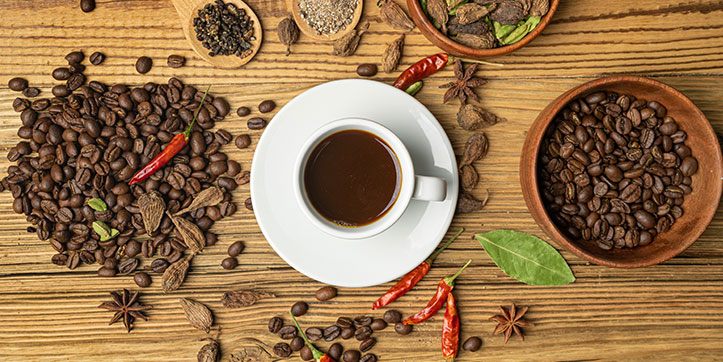

Traditional coffee made from beans

Ingredients: Simplicity with a Hint of Luxury

Despite its rich history, karak coffee’s ingredient list is deceptively simple:

  • Arabica Coffee Beans – lightly roasted to preserve their delicate, floral notes.
  • Cardamom – the star spice, lending its unmistakable warm, citrusy aroma.
  • Cloves, Saffron, Cinnamon (optional) – to layer complexity.
  • Sweetener – traditionally sugar or date syrup for a touch of caramel depth.
  • Water, and sometimes a splash of milk – just enough to bind the flavours.

At TEAMMC Cycles, we serve a cup of karak coffee that’s quickly become a Whitechapel favourite – often praised for its authentic, local taste and comforting warmth. Whether you’re stopping by after a long ride or simply in search of a moment to pause in your day, our karak delivers the perfect balance of boldness and spice. It’s rich, aromatic, and steeped in the same tradition that’s made karak a beloved ritual for generations. Many of our regulars swear it’s the closest they’ve tasted to “home” outside of home.
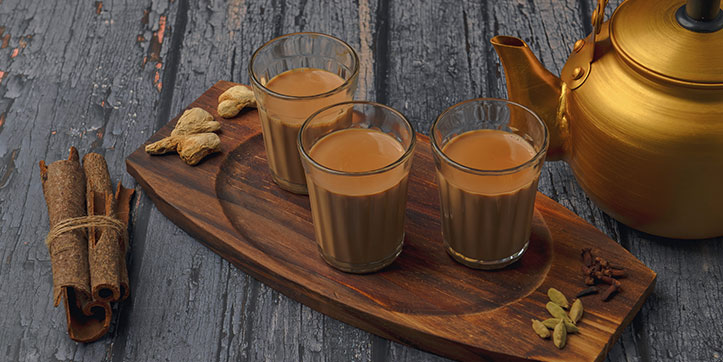

Karak coffee served traditionally

The Ceremony of Karak: More Than Just a Pour

Traditionally, karak coffee isn’t something you grab on the go. It’s a shared experience.

In Gulf households, it’s prepared in a graceful dallah (long-spouted coffee pot) and served in tiny finjan cups, never filled to the brim. This isn’t an accident: small pours invite conversation and constant refills, creating a rhythm of generosity. It’s customary to offer a guest three refills before they may politely decline.

While we might not serve karak from a dallah at TEAMMC Cycles, we honour its spirit. Here, in the middle of Whitechapel in London, each cup is an invitation – to pause, to savour, to connect with fellow riders or new friends over the rich aroma rising from your mug.
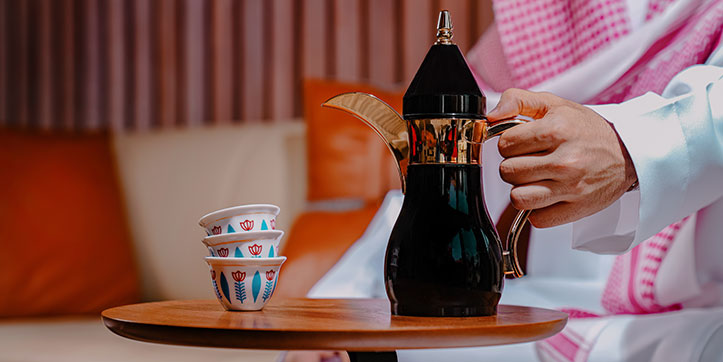

Karak coffee ceremony

From Bean to Brew: How Karak Coffee Is Made

It all begins in the mountains where Arabica beans flourish, nurtured by cool temperatures and rich soil. Light roasting preserves the beans’ inherent floral and fruity notes – unlike darker roasts that emphasise bitterness.

To brew, coarsely ground beans are simmered gently with crushed cardamom pods and spices. The process is unhurried; as the flavours meld, the aroma fills the air, almost ceremonial in its patience. Sweetener is added to taste, and milk, if used, is stirred in at the end.

At TEAMMC Cycles, we embrace modern methods without losing the traditional soul, ensuring every cup has that signature karak strength and spice.


Coffee set

Karak Coffee vs Chai: Spot the Difference

While both drinks share spices and a sense of comfort, they are as distinct as road bikes and mountain bikes.

Feature Karak Coffee Chai
Base Coffee beans Black tea leaves
Flavour Profile Spiced, bold, robust Sweet, creamy, mellow
Milk Minimal or none Generous and essential
Origin Arabian Peninsula Indian Subcontinent

If chai whispers reassurance on a rainy day, karak coffee sings with bold, spiced confidence – perfect after a long, winding ride.

Health Benefits: More Than Just a Pick-Me-Up

Karak coffee isn’t just a treat for the tastebuds; it offers some gentle wellness perks too:

  • Natural Energy Boost – A lighter caffeine dose than espresso but enough to invigorate.
  • Antioxidants – From Arabica beans and spices, supporting overall health.
  • Digestive Aid – Cardamom and cloves are celebrated for their soothing effects.
  • Heart-Healthy Potential – Studies suggest moderate coffee consumption supports cardiovascular health.

Of course, moderation is key. As much as we love it, downing a gallon of karak coffee before a hill climb probably isn’t advisable.
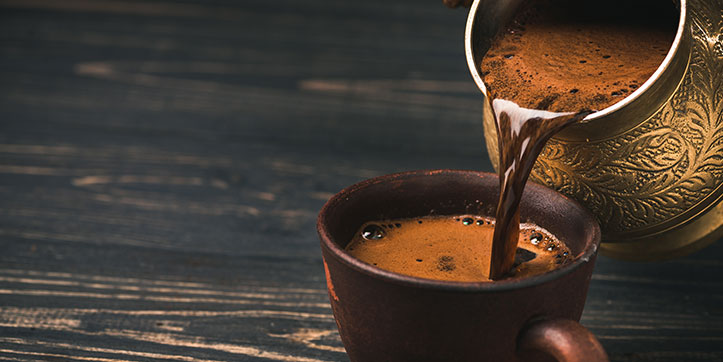

Health benefits of karak coffee

Karak at TEAMMC Cycles: A New Tradition

At TEAMMC Cycles, cycling isn’t just about miles and gears – it’s about community. That’s why our cycle café was always destined to serve something as soulful as karak coffee.

We see riders gather around steaming cups, swapping stories of their favourite routes and toughest climbs. Friends drop by mid-morning, savouring the layered spices and gentle caffeine buzz that lingers just long enough for one more lap – or one more laugh.

Drop by after your next ride, when you’re in Whitechapel, London, or bring a friend and discover why this bold brew has captured so many hearts. One sip, and you’ll understand. We’re looking forward to welcoming you.

Who Is the Best Cyclist in the World?

It’s the kind of debate that lights up group rides, pub tables, and comment sections across the cycling world: who is the best cyclist in the world?

Is it the rider with the most Tour de France wins? The one who can dominate a cobbled classic and a mountain stage? Or maybe the one who inspires people far beyond the bike. Truth is, there’s no single answer. But there are a lot of names – and stories – that make a compelling case for each of these magnificent riders.

In this post, we’ll dive into what makes a cyclist truly “the best,” look at cycling legends, analyse the top professional cyclists today, and share a few personal stories from right here at TEAMMC that remind us greatness isn’t always about yellow jerseys and podiums.


Who Is the Best Cyclist in the World right now

What Does It Mean to Be the Best?

Before we start naming names, we’ve got to ask: what does “best” actually mean in cycling?

Some people point to stats – the most wins in Grand Tours, Monuments, or World Championships. Others admire versatility: climbers who can time trial, sprinters who can survive the hills. And then there’s longevity, consistency, and raw impact on the sport.

And let’s not forget the emotional side. Sometimes the best cyclist isn’t the one with the most medals – it’s the one who changed your life, made you ride harder, or inspired you to get on a bike in the first place.

So when we ask who the best cyclist in the world is, we’re not just comparing power outputs. We’re celebrating influence, grit, and greatness.


Cyclist defying the rain

The Best Cyclists of All Time: Legends Who Set the Standard

Any discussion about greatness has to start with the best cyclists of all time, the trailblazers and record-breakers whose names are etched into cycling history.

Eddy Merckx, nicknamed The Cannibal, is the GOAT (Greatest Of All Times) in many eyes. With 11 Grand Tour wins (including 5 Tours de France), 3 World Championships, and 19 Monument victories, Merckx didn’t just win, he devoured the competition.

Then there’s Bernard Hinault, the fierce Frenchman who won all three Grand Tours and five Tours de France, often with a snarl and sunglasses that said, “don’t mess with me.”

Miguel Induráin, the quiet Spanish powerhouse, dominated the early ’90s with five consecutive Tour de France victories, riding with metronomic calm and a monstrous time-trial engine that often crushed rivals before the mountains even began.

Jacques Anquetil, the first rider to win the Tour five times, was a suave tactician on the bike and a bit of a rockstar off it. He brought precision and panache to an era still ruled by grit.

And then there was Fausto Coppi, “Il Campionissimo,” whose elegance on the climbs and tragic heroism made him a near-mythical figure in post-war Italy.

More than just champions, these riders became icons, each reshaping the sport in their own image. And their shadow still looms large today.


Eddy Merckx in a vintage race

Modern Day Greats: Who Is the Best Cyclist in the World Right Now?

When it comes to today’s top professional cyclists, one name gets mentioned more than any other: Tadej Pogačar.

At just 25, Pogačar already has two Tour de France titles, multiple Monument wins (including Liège-Bastogne-Liège and the Tour of Flanders), and a skill set that’s frankly unfair. He climbs like a goat, time-trials like a rocket, and smiles like he just found a secret tailwind.

Remco Evenepoel, the young Belgian with explosive power, and Mathieu van der Poel, the king of chaos and cobbles, round out a golden generation.

Then there’s Jonas Vingegaard, the Danish dynamo who has become Pogačar’s fiercest rival. With two Tour de France wins and surgical precision on the climbs, he’s not just defending titles – he’s reshaping how Tour dominance looks.

And you can’t ignore Wout van Aert, either. He’s a sprinter, climber, time-trialist, and cyclocross champion.

So, who is the best cyclist in the world right now? Pogačar gets the edge for all-around brilliance, but depending on the course – and your criteria – you could argue for any of these phenoms.


Tadej Pogačar racing in Tour de France

It’s Not Just the Pros: Heroes Ride Everywhere

Not all heroes wear yellow jerseys. Some wear charity kits. Or ride alone for a cause bigger than themselves. At TEAMMC, we’ve seen what greatness looks like off the podium.

Riding from UK to Makkah

One of our proudest moments was supporting a group of cyclists incl. Rashid Ali and Abdul Hannan who rode 3500 miles (5,700km) from the UK all the way to Makkah, Saudi Arabia in 56 days. They were raising money and awareness through our partner Muslim Charity’s Ride to Makkah project. Battling deserts, mountains, and thousands of miles, they showed the kind of determination even pro cyclists would respect.


Charity cyclists crossing desert

Riding LEJOG in 6 Days

And then there’s our very own Jon Halfhide, front man of TEAMMC Cycles, who rode Land’s End to John o’Groats in just six days. That’s nearly 1,000 miles across Britain. Through wind, rain, and saddle sores, Jon pedalled with heart and purpose to raise funds for the Charity’s projects – proving you don’t need a team car or a crowd to do something extraordinary.


Cyclist riding across British countryside

What It’s All About

We’re all about pushing boundaries – whether that means shaving seconds off a time trial, or just showing up to ride on days when everything hurts. To us, the best cyclist might not be the one on Eurosport – it might be the one riding next to you at dawn, chasing fitness, faith, or fundraising goals.

So, who is the best cyclist in the world? Maybe the one who keeps going. Maybe the one who inspires someone else to start.


Group cycling at sunrise

The Real Answer

There will always be new contenders, records broken, and rivalries that stir the cycling soul. But the question – who is the best cyclist in the world – will never have just one answer.

It could be Merckx for his unmatched dominance. Pogačar for his current brilliance. Or your friend who just finished their first 100km ride after doubting they ever could.

Greatness, like cycling itself, is about movement. And at TEAMMC, we’re always moving forward – one rider, one story, one pedal stroke at a time. Whatever your own opinion is, come around for a coffee and a chat at our TEAMMC Cycles café.

Who Has Won the Tour de France the Most Times? – About Legends & Records

The Tour de France – cycling’s Holy Grail, a three-week sufferfest of mountain stages, crashes, and enough Lycra to upholster the moon. Winning it once puts a rider in the history books. Winning it multiple times? That’s a one-way ticket to immortality. So, let’s answer the burning question: Who has won the Tour de France the most times?

Who Has Won the Tour de France the Most Times Overall (Officially)?

Let’s get straight to it: there are four men who share the honour of having won the Tour five times each:

  • Jacques Anquetil (France) – 1957, 1961-1964
  • Eddy Merckx (Belgium) – 1969-1972, 1974
  • Bernard Hinault (France) – 1978, 1979, 1981, 1982, 1985
  • Miguel Indurain (Spain) – 1991-1995

Each of these riders defined their era. Anquetil was smooth and tactical, Merckx was a force of nature (nicknamed “The Cannibal”), Hinault was fierce and uncompromising, and Indurain? He rode with calm domination and lungs the size of a small bungalow.

The four five-time Tour de France winners

Who Has Won the Tour de France the Most Times In a Row?

While several have matched five victories, only one man has done it in a row: Miguel Indurain from 1991 to 1995.

Winning one Tour is hard. Winning two is heroic. Winning five back-to-back? That’s like eating five croissants without dropping any crumbs on your bibs – it’s almost impossible. Indurain’s calm demeanour masked a motorised diesel engine of a body that ground his rivals down across time trials and high-altitude climbs.

Who Has Won the Tour de France the Most Times Overall (Unofficially)?

Ah yes, Lance Armstrong. He won seven consecutive Tours from 1999 to 2005. Then lost them all.

In 2012, the US Anti-Doping Agency concluded that Armstrong had led “the most sophisticated, professionalised and successful doping program that sport has ever seen.” Oof.

As a result, he was stripped of all seven titles, and the record books list those years without a winner. Some still view him as the GOAT of Grand Tours, others won’t even mention his name without a UCI disclaimer.

Why Five Is Still the Benchmark

Since Indurain’s last win in 1995, no rider has officially joined the five-win club. The closest modern contenders are Chris Froome, with four Tour victories: 2013, 2015, 2016, and 2017 and Tadej Pogačar in 2020, 2021, 2024 and 2025.

These days however, riders split their focus across the Giro, Vuelta, and other events, making five Tours a monumental task.

Also, the competition? It’s fierce. It’s like trying to win a chess game while someone throws tacks at your wheels. Constantly.

Not to mention that the demands on riders and bikes are tremendous these days. Check out the History of the Tour de France for more details.

By Country: Which Nation Has Dominated the Tour de France?

You’d think France, being the host nation, would dominate. And they have – sort of.

  • France – 36 wins
  • Belgium – 18 wins
  • Spain – 12 wins
  • Italy – 10 wins
  • United Kingdom – 6 wins
  • USA – 0* (see Armstrong, above)

France ruled the early years of the Tour but hasn’t had a winner since Bernard Hinault in 1985. Yes, you read that right: nearly 40 years of heartbreak.

It’s like inviting everyone to your party, watching them win the games, drink your beer, and leave with your trophy wife.

which country won the tour de france most times?

By Team: Which Team Has Won the Tour the Most?

If we’re talking modern Tour dominance, one name reigns: Team Sky / Team Ineos / Ineos Grenadiers.

(Though it sounds like 3 teams, only the sponsor of the team changed in 2019/2020 when riders, management and philosophy stayed the same.)

From 2012 to 2019, they won seven Tours with three different riders: Wiggins, Froome, and Thomas. Their tactics? Control the peloton like a well-oiled machine. Critics called it boring. Fans called it surgical dominance.

Past legendary teams include La Vie Claire, Banesto, and US Postal (yes, that one). But Ineos wrote the playbook on modern Grand Tour science – nutrition, aerodynamics, wattage, and probably spreadsheets for breakfast.

By Bike Brand: Which Bicycle Has Won the Most Tour de France Titles?

The true cycling nerds want to know: what bike brand has won the Tour de France the most times?

Top brands with multiple wins include:

  • Pinarello – 15+ wins (thanks to Team Sky/Ineos)
  • Trek – the Armstrong years, now unofficial
  • Colnago, Look, Specialized, and Bianchi have also tasted yellow jersey glory

Pinarello has become synonymous with Tour success. It’s the Ferrari of frames: sleek, sexy, and just expensive enough to make your partner question your priorities.

Pro tip: Having the same bike as Froome won’t make you Froome ;). Unless you also have his VO2 max, watt/kg ratio, and 17 teammates feeding you gels every 5 minutes.

Tour de France winning bikes through history

Who Has Won the Tour de France the Most Times for the UK?

For many years, British cyclists were seen as plucky underdogs – more likely to win a pub quiz than a mountain stage. But then came the Team Sky revolution with 3 British Tour winners:

  • Bradley Wiggins – 2012 (first British winner)
  • Chris Froome – 2013, 2015, 2016, 2017
  • Geraint Thomas – 2018

This golden generation stunned the French press, brought cycling into UK mainstream culture, and made “marginal gains” a household phrase. Throw in Mark Cavendish’s stage wins and Tom Pidcock’s antics on Alpe d’Huez, and suddenly Britain became a two-wheeled powerhouse.

A Few Honourable Mentions & Fun Facts

Though we feature the legends who have won the Tour de France the most times, there are a few cyclists we still want to mention:

  • Joop Zoetemelk: 1 win, 6 second-place finishes. The “always a bridesmaid” of the peloton.
  • Peter Sagan: 7 green jerseys (most ever), and possibly the most stylish rider to ever bunny-hop road furniture.
  • Tadej Pogačar: the new kid on the block, already with 4 wins and the personality of a golden retriever who can climb 10% grades. He’s close to the legendary 5 wins…
  • Eddy Merckx: also holds the record for most stage wins (34, tied with Cavendish).

Final Thoughts: Chasing the Maillot Jaune

Winning the Tour de France isn’t just about being the strongest. It’s strategy, luck, teamwork, and a certain madness that pushes you over five mountain passes in one day.

So, who has won the Tour de France the most times? Officially, four legends share the crown with five wins each. Unofficially, there’s a Texan-sized asterisk in the corner. And behind each winner is a peloton full of heartbreak, grit, and glory.

Whether you’re a weekend warrior trying to beat your clubmates on the local climb or just love watching 200 men suffer under the French sun, there’s something magical about the Tour.

🚴‍♂️ Happy Cycling! 🚴‍♀️

The 3 Grand Tours of Cycling: The What, Where, When & Who

If you love cycling, you’ve probably heard of the 3 Grand Tours of cycling – the toughest, most prestigious stage races in the sport of riding. These three-week-long epic tours push riders to their absolute limits, testing their climbing, sprinting, and time trial abilities. But what exactly is a Grand Tour, and what makes them so special? Let’s dive into the world of cycling’s biggest races and explore routes, teams and winners.


What is a Grand Tour?

A Grand Tour is a multi-week stage race of daily stages, rest days, across a variety of terrain. These races are considered the pinnacle of professional road cycling, and winning one (let alone all three) cements a rider’s place in history.
Each Grand Tour follows a similar format: around 21 stages, a mix of flat, hilly, and mountainous routes, and the battle for different classification jerseys. While the general classification (GC) riders chase overall victory, sprinters, climbers, and time trial specialists each have their own goals within the race.

What Are the 3 Grand Tours of Cycling?

The 3 Grand Tours of cycling are:

  1. Giro d’Italia (Italy)
  2. Tour de France (France)
  3. Vuelta a España (Spain)

The Grand Tours have been around for over a century, with the Tour de France dating back to 1903, the Giro d’Italia to 1909, and the Vuelta a España to 1935. These races are part of the UCI WorldTour, meaning all top-tier teams participate. They take place every year and are the biggest events on the cycling calendar for professional riders and cycling fans alike. Each race has its own unique characteristics, landscapes, and traditions, making them equally challenging and exciting.

Worth mentioning here that the women of the sport have historically lacked full-length Grand Tours, but that’s changing. The Tour de France Femmes, the Giro d’Italia Donne, and the Vuelta Femenina are gaining prestige, though they are shorter than their male counterparts, usually lasting around a week. More progress is being made to increase their status and duration

How Does Time Work in Cycling Grand Tours?

The rider with the lowest cumulative time across all stages wins the General Classification (GC). Time bonuses are given on some stages, and penalties apply for rule violations. If two riders have the same time, the best stage placements break the tie.

Why Do Riders Usually Race Only One Grand Tour?

Grand Tours are so physically demanding that most riders pick one race as their main focus. Recovery is a major issue, as each race requires months of preparation and drains energy levels completely. Some rare cyclists attempt two in a season, but completing all three at a high level is nearly impossible.

Has Anyone Won All Three Grand Tours in One Year?

Only seven riders have won all three Grand Tours of cycling over the course of their careers: Eddy Merckx, Bernard Hinault, Felice Gimondi, Alberto Contador, Vincenzo Nibali, Chris Froome, and Jacques Anquetil. However, no one has ever won all three races in a single season – a feat considered almost impossible due to its extraordinary physical demands.

Giro d’Italia: The Beauty and the Suffering

giro d'italia - first of the 3 grand tours of cycling

When Is It?

Held in May, the Giro is the first Grand Tour of the season.

Route & Distance

The race starts somewhere in Italy (or abroad occasionally) and finishes in Milan or Rome, covering around 3,400 km.

Stages & Climbing

There are 20 or 21 stages, featuring legendary climbs like Stelvio, Zoncolan, and the Mortirolo, with a total elevation gain of 45,000+ meters.

Teams & Riders

Typically 22 teams, 8 riders per team.

Duration & Rest Days

The race lasts for three weeks including two or three rest days.

Important Jerseys

  • Maglia Rosa (Pink Jersey): General classification leader
  • Maglia Ciclamino (Sprinter’s Jersey): Points leader
  • Maglia Azzurra (Blue Jersey): King of the mountains
  • Maglia Bianca (White Jersey): Best young rider

Iconic Winners

  • Fausto Coppi (5 wins)
  • Eddy Merckx (5 wins)
  • Alfredo Binda (5 wins)

Tour de France: The King of Grand Tours

tour de france

When Is It?

The Tour de France takes place every July and lasts for three weeks.

Route & Distance

The route changes yearly but traditionally starts outside or within France, ending on the Champs-Élysées in Paris. The total distance is typically around 3,500 km.

Stages & Climbing

There are 21 stages, including time trials, flat sprint days, and brutal mountain stages. Riders face famous climbs like Alpe d’Huez and the Col du Tourmalet, with total climbing between 30,000 and 40,000 meters across the entire race.

Teams & Riders

The race features 22 teams with 8 riders each, totalling 176 riders.

Duration & Rest Days

The Tour lasts three weeks with two rest days.

Important Jerseys

  • Yellow Jersey: General classification leader
  • Green Jersey: Leader by points
  • Polka Dot Jersey: King of the mountains
  • White Jersey: Best young rider

Iconic Winners

  • Jacques Anquetil (5 wins)
  • Eddy Merckx (5 wins)
  • Bernard Hinault (5 wins)
  • Miguel Induráin (5 wins)
  • Chris Froome (4 wins)
  • Tadej Pogačar (4 wins)

Vuelta a España: The Brutal Spanish Challenge

Vuelta a España

When Is It?

The Vuelta takes place between August and September, making it the last Grand Tour of the cycling season.

Route & Distance

It starts in Spain (or occasionally abroad) and finishes in Madrid, covering 3,000 – 3,500 km.

Stages & Climbing

With 21 stages, the Vuelta is known for steep climbs like Angliru and Lagos de Covadonga, with total climbing reaching 40,000+ meters.

Teams & Riders

22 teams with 8 riders per team participate in the Vuelta a España each year.

Duration & Rest Days

Riders get challenged over a period of three weeks that include two rest days.

Important Jerseys

  • Red Jersey: General classification leader
  • Green Jersey: Points leader
  • Polka Dot Jersey: Best climber

Iconic Winners

  • Roberto Heras (4 wins)
  • Primož Roglič (4 wins)
  • Tony Rominger (3 wins)
  • Alberto Contador (3 wins)

Passion for Saddle Surfing

The 3 Grand Tours of cycling are legendary tests of endurance, grit, and strategy. Whether it’s the history-rich Tour, the mountainous Giro, or the punishing Vuelta, each race offers drama, heroics, and cycling magic. At TEAMMC Cycles, we share your passion for cycling. Come by to have a chat over a coffee about all things cycling, or to get your bike tuned up for the season. Either way, let’s keep that cyclist’s heart of yours singing!

🚴‍♂️ Happy Cycling! 🚴‍♀️

The Sweet Truth: Health Benefits of Medjoul Dates (And Why They’re Your New Snack Obsession)

They look like giant raisins, taste like soft caramel, and have been crowned the “king of dates.” But are Medjoul dates healthy, or are they just nature’s version of a candy bar?

Spoiler alert: Medjoul dates aren’t just healthy – they’re a nutritional powerhouse disguised as a sweet treat. Packed with fibre, vitamins, and enough natural energy to fuel your day (or a 50km bike ride), these humble fruits might just earn a permanent spot in your pantry.

Let’s unwrap the health benefits of Medjoul dates and see why they’re a favourite for snackers, health nuts, and even cyclists. And yes, you can stock up on premium Medjoul dates from TEAMMC Cycles – because we know you’re already curious.


Dried Medjoul dates

What Exactly Are Medjoul Dates?

Before we dive into their benefits, let’s meet the star of the show. Medjoul dates come from the date palm tree (Phoenix dactylifera), originally cultivated in Morocco but now grown in warm climates worldwide.

They’re larger, softer, and juicier than regular dried dates – hence the royal nickname. Bite into one and you’ll get rich, caramel-like sweetness with hints of honey and cinnamon. Think of them as nature’s fudge… but with bonus health points.

And in case you’re wondering, no, you don’t need to plant a palm tree in your kitchen to enjoy them. We’ve got you covered with fresh, plump Medjoul dates at TEAMMC Cycles.


Date palm tree with ripe dates

5 Health Benefits of Medjoul Dates

But now let’s discuss why you’re here. What are the health benefits of Medjoul dates? Here are a few undeniable advantages of this force of nature.

1. A Nutrient Powerhouse

So, are Medjoul dates healthy? Let’s talk nutrition.

Here’s what just two Medjoul dates (about 48 grams) bring to the table:

  • 3.2 grams fibre (12% of your daily needs)
  • 334 mg potassium (more than a banana)
  • 1 mg iron
  • Natural sugars (fructose and glucose) for clean energy
  • Vitamins B6, magnesium, copper, and antioxidants

They’re also free from cholesterol, saturated fat, and trans fats – unlike the chocolate bar whispering your name from the cupboard.

In short: they’re tiny packages of nutrients designed to fuel your body – minus the processed additives.

Think of Medjoul dates as nature’s energy bar… without the weird chalky protein aftertaste.


Nutrition facts of Medjoul dates

2. Heart Health Hero

Medjoul dates are brimming with potassium, an essential mineral that helps regulate blood pressure and support heart function. In fact, gram for gram, they’ve got more potassium than bananas.

Potassium keeps your ticker happy and helps your muscles contract properly. That’s good news whether you’re powering through a spin class or just trying to make it up the stairs without wheezing.

And those antioxidants we mentioned? Polyphenols in dates can help reduce oxidative stress, which contributes to heart disease.


Heart health and dates

3. Gut-Friendly Goodness

Here’s something your digestive system will love: Medjoul dates are rich in soluble fibre. This does two great things:

  • Keeps things… ahem… moving.
  • Slows sugar absorption, giving you sustained energy without the sugar crash.

Perfect if you want to avoid the rollercoaster of sugary snacks. Your gut bacteria will throw a tiny celebration.

Oh, and if you’ve ever had the misfortune of discovering just how “fast-acting” certain fibre bars can be, rest assured: Medjoul dates support digestion naturally – no panicked sprints to the bathroom required.


Dates and gut health

4. A Natural Energy Boost (Bonus for Active Folks)

If you’re into cycling, running, or any endurance sport, Medjoul dates might just become your new ride-or-die snack.

Their natural sugars provide an instant energy hit, while the fibre helps avoid sudden spikes and crashes. Plus, they’re compact and mess-free, ideal for tucking into a jersey pocket or gym bag.

Think of them as nature’s energy gel – minus the sticky packets and questionable flavours like “electric blueberry.”

Even if you’re not training for a century ride, Medjoul dates are perfect for:

  • A pre-workout snack to fuel your session.
  • A mid-afternoon pick-me-up at work (much healthier than raiding the biscuit tin).
  • Replenishing energy on long hiking or sightseeing days.

It’s energy on-demand, courtesy of Mother Nature.


Dates as energy snack for cyclists

5. Natural Sweetness Without the Guilt

Unlike refined sugar, Medjoul dates come with fibre, minerals, and antioxidants. This means they don’t spike your blood sugar in the same way a candy bar would.

They’re perfect for:

  • Swapping out sugar in baking.
  • Sweetening smoothies naturally.
  • Pairing with nut butter for a balanced snack.

Pro tip: Stuff a Medjoul date with almond butter and a sprinkle of cinnamon, and you’ve got yourself a snack so good it might earn a fan club.

It’s like upgrading from instant coffee to a barista-made flat white – your body will notice the difference.


harvesting dates

Fun and Easy Ways to Enjoy Medjoul Dates

Ready to get creative? Here are a few delicious ideas:

  • Stuffed Dates: Almond butter, peanut butter, cream cheese, or even a square of dark chocolate.
  • Energy Balls: Blend Medjoul dates with oats, cocoa, and nuts for no-bake snacks.
  • Smoothies: Toss a couple into your morning blend for a caramel-like sweetness.
  • Salads: Chop into leafy salads for a burst of natural sugar and chew.
  • Baking: Use as a sugar substitute in cakes, muffins, and breads.

Or – keep it simple – just eat them straight from the pack. No judgment.


Recipes using Medjoul dates

Why Choose TEAMMC Cycles Medjoul Dates?

Not all dates are created equal. At TEAMMC Cycles, we’re proud to bring you the finest, plumpest Medjoul dates, grown sustainably, harvested at peak ripeness, and carefully packed by Palestinian farmers. They contain no added sugar, no preservatives, just pure, natural goodness delivered straight to your door.

What makes them even sweeter? Every purchase helps provide nutritious school meals for Palestinian children, supporting both their education and their families’ well-being.

Ready to level up your snacking? Grab your pack of TEAMMC Cycles Medjoul Dates today.


Energy dates balls

The Verdict: Are Medjoul Dates Healthy?

Short answer: YES.

Long answer: YES, and then some. Medjoul dates are rich in nutrients, support heart and gut health, provide clean energy, and taste like nature’s candy. Whether you’re an athlete or just someone trying to snack smarter, they’re a win-win.

So next time you’re reaching for a “healthy snack,” skip the ultra-processed bars with unpronounceable ingredients and grab Medjoul dates instead. Your body (and taste buds) will thank you.

Try them today. Stock up on premium Medjoul dates from TEAMMC Cycles and snack the healthy, delicious way.

What Is a Cycling Peloton? Your Beginner’s Guide to the Pack

If you’ve ever caught a few minutes of the Tour de France, Giro d’Italia, or any big cycling race, you’ve probably seen it – a massive, moving swarm of riders, flowing like a river of Lycra across French countryside roads. You may have even muttered, “What is a cycling peloton anyway?” before switching channels to avoid confronting how fit those cyclists are.

Let’s break it down. Whether you’re a hobby cyclist, a fan of the big races, or just heard someone bragging about “sticking with the peloton on Zwift,” this guide will clear things up.

Professional cycling peloton in a race

So… What Is a Peloton in Cycling?

In the simplest terms, a cycling peloton is the main group of riders in a road race who stick together for most of the event. The word comes from French, meaning “platoon” or “small ball” – both of which feel oddly accurate when you see 150 cyclists bunched up tighter than the socks in your drawer.

Think of the peloton as the cycling world’s version of a school of fish. They move together, shift directions together, and, occasionally, get caught in a bit of a tangle.

And no, this isn’t about the exercise bike gathering dust in your neighbour’s guest room. That’s Peloton (capital P, trademarked). This is peloton, lowercase p – the real-life one where people sweat outside and don’t get points for leaderboard shoutouts.

Cyclists riding close together in a peloton

Why Do Cyclists Ride in a Peloton?

It isn’t just for the camaraderie (though that helps). The main reason pro riders stick together in the peloton is aerodynamics. Riding in a tight pack drastically reduces wind resistance for those in the middle and rear – saving up to 40% of their energy.

Picture cycling alone on a windy day: you’re pedalling hard, cheeks flapping, questioning all your life choices. Now imagine tucking in behind 50 riders, barely touching the pedals, yet cruising at 40km/h. That’s the magic of the peloton.

Drafting in cycling peloton

Peloton Dynamics: More Than Just a Group Ride

From the outside, the peloton might look chaotic. But there’s a lot going on beneath the surface – and there is a strategy:

  • Leaders stay sheltered in the middle until it’s time to strike.
  • Domestiques (team support riders) fetch bottles, block wind, and protect their leaders.
  • Sprinters bide their time at the back, ready to rocket to the front in the final kilometres.

Positions shift constantly. Riders fight for space like commuters on a packed train. The front of the peloton is hard work; the middle is easier but riskier (closer quarters = more crashes).

And yes, crashes do happen. One errant elbow, one bottle dropped at the wrong moment, and suddenly there’s a domino effect of carbon fibre hitting tarmac.

For casual riders: don’t worry. Your Sunday spin won’t look like this. But more on that in a bit.


Famous Peloton Moments You’ll Want to Google Later

The peloton has given us some unforgettable cycling moments:

  • The 2011 Tour de France Stage 3 pile-up, where a TV car swerved into riders.
  • The 2021 Tour de France sign crash, when one fan’s cardboard sign caused a spectacular chain reaction. Reminder: look where you’re standing if you’re at a race.
  • Incredible breakaways – when lone riders escape the peloton’s grasp for a glorious (and rare) solo victory.

Even if you’re just a casual fan, the peloton’s drama is half the fun of watching pro cycling.

cyclist breakaway from peloton

Can You Ride in a Peloton?

Here’s the thing: unless you’re riding the next Tour de France, you won’t be riding in a 150-rider peloton any time soon. But the good news? You can experience group riding, which borrows some of the same principles.

Joining a local group ride teaches you how to:

  • Ride safely in close proximity to others.
  • Communicate with hand signals and calls.
  • Maintain a steady pace so nobody gets dropped (or ends up gasping at the back).

Yes, it can feel intimidating at first, but even the pros had to start somewhere. At TEAMMC Cycles, our group rides are beginner-friendly, social, and designed to welcome cyclists of all levels – without any need to battle for position or sprint to the finish.


Why Hobby Cyclists (and Fans) Should Care About Pelotons

Even if you never plan to ride in one, understanding the peloton makes watching races way more interesting. Suddenly, you’ll spot:

  • Teams controlling the pace at the front.
  • Riders hiding at the back to conserve energy.
  • Brave breakaways trying to outwit the pack.

And if you’re a cyclist, group riding is a fantastic way to improve your fitness, meet like-minded people, and enjoy the safety of numbers on the road.

At TEAMMC Cycles, we run regular group rides that are perfect for cyclists of all levels – whether you’re training for your first sportive or just fancy a scenic ride with great company.

Our rides are about connection, encouragement, and having fun on two wheels. No egos, no peloton politics – just the joy of cycling together.

Why not give it a try? Sign up for one of our group rides today and discover the difference riding as part of a pack can make.

Community group cycling ride

FAQs: What Is a Cycling Peloton?

Q: What does peloton mean in cycling?
A: It’s the main group of riders in a road race, riding closely together to save energy and control the race pace.

Q: Can beginners ride in a peloton?
A: In pro racing, no. But beginners can join group rides, which offer a similar sense of community (without the chaos).

Q: Is riding in a peloton dangerous?
A: In pro races, there’s a risk due to high speeds and close quarters. On casual group rides, things are much calmer and safer.

5 Easy Energy Balls Recipes with Dates (Perfect for Active Athletes)

Let’s be honest. When you’re halfway up a hill and your legs are staging a protest, no one reaches for a bag of kale. You need something compact, satisfying, and packed with real energy. The no-brainer: energy balls – nature’s answer to “What do I eat that won’t melt in my jersey?”

These no-bake snacks are ridiculously easy to make, delicious, and ideal for cyclists, hikers, and busy humans who sometimes eat lunch standing up. Below, you’ll find five variations of classic energy balls recipes with dates, from chocolatey to tropical, all fuelling you for whatever lies ahead – be it a 100km ride or a heroic grocery run.

Classic Almond-Date Energy Balls

Why Dates?

Dates are nature’s caramel, rich in natural sugars (glucose, fructose, and sucrose), potassium, fibre, and just enough sweetness to make you feel like you’re eating something naughty… without actually eating something naughty.

In short, they’re the perfect base for an energy ball recipe. Blend them up with nuts, oats, seeds, or chocolate, and you’ve got a portable snack that won’t melt in your jersey or require a degree in molecular gastronomy to make.

Easy Energy Balls Recipes with Dates

Recipe 1: Classic Almond-Date Energy Balls

The one you bring home to meet your parents.

Ingredients:

  • 1 cup Medjoul dates (pitted)
  • 1 cup raw almonds
  • 1/2 cup rolled oats
  • Pinch of sea salt
  • 1/2 tsp cinnamon (optional)

Instructions:

  1. Toss everything into a food processor.
  2. Blend until the mixture is sticky and crumbly.
  3. Roll into 1-inch balls and refrigerate for 30 mins.
  4. Try not to eat them all before your next ride.

Swap almonds for walnuts if you’re feeling wild.
Almond date energy balls

Recipe 2: Chocolate Peanut Butter Date Balls

For the cyclist who trains hard but snacks harder.

Ingredients:

  • 1 cup Medjoul dates
  • 1/2 cup natural peanut butter
  • 2 tbsp cocoa powder
  • 1/2 cup oats
  • 1 tbsp chia seeds (because #health)

Instructions:

  1. Blend dates first until they form a paste.
  2. Add all other ingredients and pulse.
  3. Roll into balls and chill.

These are basically healthy Reese’s cups for your back pocket. Perfect for those sweet cravings post-ride or mid Netflix-binge recovery.

Coconut Cashew Date Energy Balls

Recipe 3: Coconut Cashew Date Energy Balls

Our personal favourite energy ball recipe with dates: an island vacation your mouth deserves.

Ingredients:

  • 1 cup dates
  • 1 cup raw cashews
  • 1/2 cup shredded coconut (unsweetened)
  • 1/2 tsp vanilla extract

Instructions:

  1. Blend cashews first, then add the dates and vanilla.
  2. Add coconut and pulse a few times to combine.
  3. Roll into balls and coat with extra coconut (because aesthetics).

Great for when you’re dreaming of Bali but your GPS says you’re 12km into a headwind.

Trail Mix Date Balls

Recipe 4: Protein-Packed Date Energy Balls

For when you want to snack and feel smug about it.

Ingredients:

  • 1 cup dates
  • 1 scoop vanilla or chocolate protein powder
  • 1/2 cup almond butter
  • 1/4 cup oats
  • 2 tbsp ground flax or chia seeds

Instructions:

  1. Blend dates and nut butter first.
  2. Add protein powder and other dry ingredients.
  3. Form into balls and store in the fridge.

These are your post-ride besties. Eat two and pretend you’re on a pro team.

Protein-packed date energy balls

Recipe 5: Trail Mix Date Balls

Because sometimes, indecision is the spice of life.

Ingredients:

  • 1 cup dates
  • 1/2 cup mixed nuts
  • 1/4 cup dried cranberries or raisins
  • 2 tbsp sunflower seeds
  • 1/4 cup oats

Instructions:

  1. Pulse dates until smooth.
  2. Add remaining ingredients and pulse just enough to mix.
  3. Leave some chunks for texture and trail mix authenticity.

A great “clean out your pantry” ball. Customisable, crunchy, and perfectly chaotic.

Trail mix energy balls

Where to Get Your Dates (And Do Some Good)

Are you ready to get started with your date energy ball recipe? Did you know that TEAMMC Cycles offers premium Medjoul and Ajwa dates, and that 100% of the profits go to charity? When you buy your dates through TEAMMC Cycles, you’re not just fuelling your ride, you’re helping fuel hope around the world.

We support our partner Muslim Charity’s humanitarian projects, supporting life-changing work like building water wells in Yemen, providing emergency aid in Gaza, funding mobile health clinics in Bangladesh, and running shelters for orphaned children in Pakistan.

It’s a snack with impact. And yes, that makes them taste even better.

Learn more about these projects and order your Medjoul dates or Ajwa Dates today.

Why Cyclists Love Date Energy Balls

We promised you a cyclist angle, and here it is: date energy balls are a cyclist’s secret weapon. Here’s why:

For cyclists, energy balls recipes with dates are more than just a trendy snack. They’re practical, powerful fuel. Dates are rich in fast-acting natural sugars, making them ideal for providing a quick energy boost during long rides without the sugar crash that often follows processed snacks.

Because they’re dense, compact, and don’t melt, they’re incredibly convenient to carry in a jersey pocket or saddlebag, even on warm days.

Plus, with minimal ingredients and no artificial fillers, they tend to be easy on the stomach, which is crucial when you’re hours into a ride and your digestive system is more focused on survival than digestion. Whether you need a pre-ride energy boost, a mid-ride morale lifter, or something to help you recover post-spin, energy balls with dates fit the bill. And taste a lot better than most ride snacks pretending to be food.

So next time you’re prepping for a big ride, skip the gels that taste like regret and grab a handful of these instead.

energy date balls for cyclists, hikers

Storage Tips (aka: Don’t Eat Them All in One Sitting)

  • Store in an airtight container in the fridge for 1–2 weeks.
  • Freeze for up to 3 months.
  • Thaw for 10 mins before eating if frozen (or gnaw like a hungry bear).

Final Word: Make Them, Work Out Hard, Repeat

Whether you’re new to the bike or gearing up for your next endurance challenge with TEAMMC, these energy ball recipes with dates are a small but mighty tool in your nutrition arsenal.

Try a batch (or five), tweak the flavours, and tag us on Instagram @teammccycles. We want to see your snack setups and hear which ones got you through “that climb.”

Happy Riding.

How Does the Tour de France Work? A Beginner’s Guide to Cycling’s Greatest Race

Every July, cyclists from around the world saddle up to do the unthinkable: ride thousands of kilometers, up and down mountains, across cobblestones, through all types of weather – and somehow, smile for the cameras while doing it. This is the Tour de France, and it’s one of the most legendary (and let’s be honest, slightly bonkers) sporting events on the planet.

But if you’re not already fluent in pelotons, time bonuses, and jerseys with polka dots, the Tour can feel like a confusing blur of bikes and French villages. So let’s break it down: what is this race, how does the Tour de France work, and why do people voluntarily suffer through it?

What Is the Tour de France?

The Tour de France is the world’s most famous cycling race: a three-week epic held every summer since 1903 (minus a few breaks – check out “The history of the Tour de France” if you want to know more). But it’s not just a race. It’s a cultural phenomenon, a strategy game on wheels, and possibly the only sport where eating more than 5000 calories per stage is not only allowed but necessary.

Tour de France Peloton

The race usually lasts 23 days, with 21 racing stages and two rest days – which, for some riders, still involve a “recovery” ride of 100km. Casual.

The total distance is around 3,000 to 3,500 kilometers (that’s about 2,000 miles), depending on the year’s route. That’s like cycling from London to Rome… and then deciding to take a scenic detour through the Alps just for fun.

How does the structure of the Tour de France work?

The Tour is split into 21 stages, and each one plays a different role in shaping the overall race.

Mountain Stage Tour de France

The different types of stages give the Tour de France the character that turns it into one of the most challenging cycling races.

  • Flat stages: Designed for sprinters. These are the fast and furious days where speeds can hit 70 km/h and victory is often decided by a millimeter.
  • Mountain stages: These are the big leg-breakers. Long climbs in the Alps or Pyrenees where riders either ascend to glory or question all their life choices.
  • Time trials: Also called “the race of truth,” this is where cyclists go solo against the clock. No drafting. No excuses. Just one man (or woman) and their legs, screaming.
  • Rest days: Ironically, still not very restful as riders often do a casual ride of 100+km to keep the momentum.

Each day has its own winner, but the big goal is the General Classification (GC) (we’ll get to that in a moment).

And yes, the route changes every year, but the Tour always finishes in Paris, typically with a champagne-sipping procession into the Champs-Élysées. Because nothing says “I’ve suffered for 3,000 kilometers” like a well-earned toast.

Teams and Tactics (Yes, It’s Not Just Pedaling)

While the yellow jersey is awarded to an individual, cycling is very much a team sport. Each of the 22 teams in the Tour de France brings 8 riders, each with their own role.

Cycling Team Strategy

There’s:

  • The team leader, aiming to win the Tour.
  • Climbers, who shoot up mountains like they’re running from gravity itself.
  • Sprinters, who go from zero to warp speed in the final 200 meters.
  • Domestiques (French for “servants”), who fetch water bottles, set the pace, and literally sacrifice their race for the leader.

Often the focus is on the team leader going after the yellow jersey. But they wouldn’t be able to do it without the help of their team.

What’s With All the Jerseys?

Yes. The jerseys. We mentioned a couple already. Not just a fashion statement – though frankly, more sports should embrace polka dots – each special jersey represents a different competition within the race:

  • Yellow Jersey (Maillot Jaune): Worn by the rider with the lowest overall time. Basically, the race leader.
  • Green Jersey: Awarded to the best sprinter – the one racking up points in flat stage finishes and intermediate sprints.
  • Polka Dot Jersey: For the King of the Mountains. You earn points by reaching the top of climbs first.
  • White Jersey: Best young rider under 26. Like Rookie of the Year, but with 10% more lactic acid.

Tour de France Jerseys

Jerseys can change hands daily. You could be in yellow one day and off the podium the next. That makes each day of the Tour de France so exciting.

How Do You Win the Tour de France?

Now here’s the twist: you don’t actually have to win any stages to win the Tour.

Yep – the General Classification (GC) is based on your total time across all stages. So, if you’re consistently fast (and smart), and avoid major time losses in mountain stages or time trials, you can end up in yellow without ever being first across a single finish line.

Still, many riders go all-in for:

  • Stage wins (huge for their career and team).
  • Points classification (green jersey).
  • Mountain classification (polka dots).
  • Young rider classification (white jersey).

How Do the Tour de France Teams Work?

Let’s take a moment to appreciate the most underrated athletes in the Tour: the domestiques. These are the loyal workhorses who spend hours at the front of the peloton, shielding their leader from the wind, chasing down breakaways, and handing over their bikes if something breaks.

Domestique helping team leader

Tactics matter too. Knowing when to attack, when to draft, when to save energy – it’s like chess on wheels. Only in chess, no one’s pedaling uphill for four hours in 35°C heat while dodging cows and selfie sticks.

Why Is the Tour So Hard (and So Loved)?

The Tour isn’t just hard. It’s ludicrously hard. Imagine doing back-to-back marathons – on a bike – for three weeks straight. Riders burn around 5,000-7,000 calories a day, suffer crashes, dehydration, altitude sickness, and sometimes even rogue spectators.


And yet… it’s glorious.

There’s something magical about how the Tour de France works. The landscapes, the rivalries, the sheer human drama of it all. Watching someone climb the Col du Tourmalet, face twisted in pain, fans screaming in their ears, knowing they still have two more mountain stages to go – that’s the kind of madness that inspires.

Plus, there’s a certain joy in seeing someone eat an entire baguette mid-ride and then go drop the entire peloton.

Fun Facts That Impress

The longest Tour de France ever was in 1926, clocking in at 5,745 km. 

The youngest winner? Henri Cornet, who won in 1904 at the age of 19.

The record for most wins is five – shared by legends like Eddy Merckx, Bernard Hinault, Miguel Indurain, and Jacques Anquetil.

Yes, riders do eat during the race: bars, gels, sandwiches, rice cakes, even Coca-Cola. The Tour is basically one long rolling picnic, but with fewer nap breaks.

Conclusion: It’s Complicated, Beautiful, and Worth Watching

Here is how the Tour de France works: it’s chaotic, epic, sometimes ridiculous, and always inspiring. It combines strategy, teamwork, endurance, and a healthy dose of unpredictability.

Whether you’re a hardcore cycling fan or someone who just wants to know why that guy in yellow looks so smug, the Tour offers something for everyone. And who knows? After a few stages, you might even find yourself shouting “Allez! Allez!” at your screen while Googling how to participate in a local cycling event (for mortals).

Just remember: you don’t need to ride 3,000 km to be part of the fun. But if you do, maybe bring snacks.

How to Train for Land’s End to John o’ Groats

So, you’re eyeing up the big one: Land’s End to John o’ Groats (LEJOG). Bottom to top. Coast to coast. 1,000+ miles of rolling hills, unpredictable weather, and endless stories to tell your grandkids. And you want to do it in 10-14 days? Ambitious, yes. Impossible? Absolutely not.

Here’s how to train for Land’s End to John o’ Groats that averages 70-100+ miles a day without turning into a broken shell of your former self.

How to Train for LEJOG

How Fit Do You Need to Be for LEJOG?

Let’s not sugarcoat it: riding LEJOG in 10 to 14 days is no holiday cruise. You’ll be in the saddle for 6 to 8 hours a day, burning thousands of calories and pushing through sore legs, wind, and possibly the odd existential crisis. You need endurance, resilience, and a decent tolerance for soggy socks.

But don’t let that scare you off. This isn’t the Tour de France. With consistent, focused training, and the right mindset, it’s entirely doable. Many cyclists with day jobs and families have completed it and lived to tell the tale (some even with a smile).


Why Should You Train for Land’s End to John O’Groats?

Preparing for a ride like Land’s End to John o’ Groats isn’t just about ticking off miles on your GPS. It’s about getting your body (and backside) ready for back-to-back days in the saddle.

Spending time on your bike before the big ride helps your muscles adapt to the strain, improves your cardiovascular endurance, and crucially, gets you used to sitting on your saddle for hours at a time. Spoiler alert: your first few long rides may come with a side of numb bum, but it gets better.

Consistent training also helps you dial in your setup – tweaking saddle height, handlebar position, and gear choices – so you’re not discovering aches and pains halfway through Cornwall. Basically, the more prepared you are, the more you’ll enjoy the ride (and the fewer dramatic sighs you’ll heave every time you see a hill).

Cyclist checking their bike

How to Train for a 10-14 Day LEJOG: The Essentials

Start by building a solid aerobic base. You’ll want your heart and lungs cruising comfortably for long periods. Time in the saddle is your golden metric. Don’t get too obsessed with speed or watts – focus on endurance and comfort.

Key elements to include:

  • Consistency over time: Aim for at least 4 rides a week.
  • Back-to-back long rides: Your legs need to know what day-after-day fatigue feels like.
  • Hills and intervals: Sprinkle in intensity. Cornwall won’t climb itself.
  • Strength training: Squats, lunges, and core work will keep you solid in the saddle.
  • Stretching and mobility: Because riding with hamstrings like piano wires is no fun.

How to Train for Land's End to John o' Groats indoors

Sample Week: Intermediate to Advanced Cyclist

Here’s what a typical week might look like a couple of months out from your ride:

  • Monday – Rest or gentle yoga/stretching
  • Tuesday – Intervals or hill repeats (1.5 hrs)
  • Wednesday – Zone 2 endurance ride (90 min)
  • Thursday – Tempo ride (2-3 hrs with sustained effort)
  • Friday – Rest or short recovery spin (1 hr)
  • Saturday – Long ride (build up to 100-120 km with loaded bike if possible)
  • Sunday – Medium-long ride (3-5 hrs, ride on tired legs)

Every 3-4 weeks, reduce volume for a recovery week. You’re building, not burning out.

enjoying cycling and stay motivated

Train Like You Mean It (and Like You’ll Actually Ride)

Don’t just train for distance. Train for the reality of LEJOG: unpredictable weather, loaded bikes, and long days. Get out there in the drizzle. Practice riding with your panniers or saddlebag. Break in your shorts and your chamois cream strategy (don’t leave that discovery for Day 2 of your ride).

Fuel like it’s real too. Try out different snacks and hydration strategies. What goes down easy at mile 30 may not sit so well at mile 90. Find your sweet spot between energy balls and jelly babies.

And yes, ride tired. Ride when you’d rather be watching Netflix. That’s where the magic happens.

Cyclist in the mountains

Tapering Off and Prepping Up

About 7-10 days before your LEJOG adventure, it’s time to taper. Cut back on volume but keep a touch of intensity to stay sharp. Don’t do any new or heroic rides during this time. No last-minute Everestings, please.

Your biggest back-to-back rides should be 2-3 weeks out, something like 3 consecutive 80-100 km rides. These are your dress rehearsals. If something squeaks, chafes, or fails, better to discover it now than on Day One in Cornwall.

Bonus Tips How to Keep Training for Land’s End to John o’Groats

  • Recovery is king: Sleep, stretch, and eat well.
  • Dial in comfort: Small saddle or shoe issues become big problems fast.
  • Ride with your kit: Especially if you’ll be carrying bags.
  • Track progress: Use a cycling app to stay motivated and see gains.


Bike Prep & Kit Tips

When it comes to preparing your bike and kit for a 10-14 day LEJOG adventure, comfort beats lightweight gear every time.

A well-fitted bike with a comfy saddle will do more for your endurance than shaving off a few grams with carbon this-or-that. Invest in key essentials like padded shorts (your future self will thank you, promised), a decent saddle, reliable lights, and proper waterproof layers – you’re riding in Britain, after all.

It’s also worth brushing up on basic bike maintenance: knowing how to fix a puncture, or adjust your brakes can be the difference between a minor hiccup and a full-on meltdown in the middle of nowhere.

We highly recommend getting your bike serviced about a week before your ride. This ensures your bike is in top condition and your “machine” doesn’t work against you with rusty chains and knackered tyres.

And remember, more saddle time is far more valuable than fancy upgrades – ride more, faff less.

Bike maintenance to train for land's end to john o'groats

Final Thoughts + The All-Important Call to Adventure

How to train for Land’s End to John o’ Groats isn’t just about physical preparation. It’s about building mental grit, finding joy in long rides, and learning how your body works best under pressure. Some days you’ll feel like a machine. Other days, you’ll bond with your inner sloth. Both are fine. Keep pedalling.

If you fancy a LEJOG ride in a supportive team, sign up to TEAMMC’s Land’s End to John o’Groats adventure. We handle the logistics and your luggage so you can focus on the cycling, the scenery, and the café stops. Let’s make those 1,000 miles your greatest ride yet.

🚴‍♂️ Happy Cycling! 🚴‍♀️

Tour de France History: Grit, Gears, and Glory on Two Wheels

The Tour de France. Even if you don’t ride a bike, you’ve probably heard of it. A swirl of spandex, sweat, and spectacular scenery. It’s more than just a race. It’s a saga of drama, defiance, and excitement. So, what makes the Tour de France such a big deal? Let’s take a deep dive into Tour de France history and see why this two-wheeled epic continues to captivate millions each year.

How It Started

The history of the Tour de France starts not with a bicycle, but with a newspaper. Back in 1903, a struggling French sports daily called L’Auto (yes, ironically named given the pedal-powered focus) decided to stage a bike race around France to boost circulation. The editor, Henri Desgrange, didn’t quite realise he was inventing what would become the world’s most prestigious cycling event.

The first Tour was no picnic. Six stages, over 2,400 kilometres, and zero carbon fibre. Riders braved unpaved roads, often riding through the night, sometimes stopping for wine and cheese. Maurice Garin, a chimney sweep by trade, took the inaugural yellow jersey, forever etching his name in Tour de France history.

Vintage bicycle representing early Tour de France era

The Tour de France History: From Grit to Glory

The Tour de France wasn’t born glamorous. The early Tours were as much a test of character as physical ability. Drafting behind cars, hopping on trains, or sneaking a tow – cheating was practically a sub-discipline. Riders had to be their own mechanics, medics, and motivational speakers. Yet somehow, the race endured – and legend after legend was born.

The 1930s

By the 1930s, things got a bit more organised. National teams replaced trade teams, and support vehicles were introduced. That meant riders could finally focus more on racing and less on whether their wheel would fall off.

increase popularity of tour de france

No Races During the World Wars

Of course, there were years when the Tour didn’t roll at all. World War I (1915–1918) and World War II (1940–1946) brought the race to a halt. But even war couldn’t kill the spirit of the Tour. In fact, the post-war editions were symbolic of national recovery. The 1947 race, won by Jean Robic became a fan favourite. Robic, known for his bird-like build and relentless grit, famously carried a bottle of rum on his bike. Because electrolytes are overrated, apparently.

Cyclist climbing mountain representing legendary Tour climbers

The Early Hype

The 1950s and ’60s saw the rise of greats like Fausto Coppi and Louison Bobet, before the machine-like precision of Jacques Anquetil took over. Anquetil was the master of the time trial, emotionless and calculated. His dominance set the stage for an even bigger force: Belgium’s Eddy Merckx. “The Cannibal,” as he was dubbed, didn’t just win – he devoured. In 1969, he won the general classification, points classification, and mountains classification all in the same year. Absolutely legendary!

History of the tour de france

Technological Revolutions in the 1980s

From the 1980s onward, the Tour shifted gears again – both figuratively and literally. Technological advancements changed the game: indexed gears, lighter frames, aero helmets.

1985 was the last year a Frenchman won the Tour: Bernard Hinault, who combined Anquetil’s ruthlessness with Merckx’s aggression. Hinault wasn’t afraid of the peloton – or protesters. In 1984, he famously punched a striking dock worker who tried to block the race. Vive la Résistance.

American Greg LeMond shook up the old guard in 1986 by becoming the first non-European to win. He later clinched the 1989 Tour using aerobars in a time trial, beating Laurent Fignon by just 8 seconds – the closest margin in Tour history. Suddenly, tech and tactics mattered as much as raw power.

Cyclist racing representing the Armstrong era and scandals

Mainstream Popularity & Scandals

The 1990s and early 2000s saw the sport enter both its most watched and most controversial era. The Lance Armstrong years brought in millions of new fans – but later turned sour with revelations of systematic doping. From the Festina Affair in 1998 to Armstrong’s eventual lifetime ban, the Tour hit rock bottom. But it didn’t stay there. The fallout led to stricter testing, biological passports, and a generation of riders determined to prove the sport could rise again.

Tour de France history: peloton racing through countryside

21st Century Diversity and Expansion

And rise it has. The 2010s brought new talent and parity. Teams like Sky (now INEOS Grenadiers) introduced a scientific, data-driven approach. Meanwhile, riders from Colombia, Australia, and Slovenia began to dominate the General Classification. The Tour got younger and faster, and by 2019, Egan Bernal became the first South American to win the yellow jersey.

The new guard is thrilling to watch. Tadej Pogačar, the Slovenian phenom, has brought flair, aggression, and the energy of a teenager who forgot to check the breakaway list. Jonas Vingegaard, his calm and calculating rival, makes every climb look like a spreadsheet playing out in real time.

Technology, too, continues to evolve. Carbon bikes now weigh less than a decent baguette. Power meters guide every pedal stroke. Riders train on virtual platforms like Zwift, which is basically Mario Kart but with Lycra and FTP zones.

Tour de France Femmes

And we can’t talk about progress without mentioning the return of the Tour de France Femmes avec Zwift. The Tour de France Féminin originally ran in the 1980s but struggled for support. After years of underrepresentation, women’s cycling finally received the platform it deserves. Under the banner Tour de France Femmes avec Zwift, the 2022 race was a smash hit – both in viewership and competitive excitement – marking a bold new era for the sport.

So yes, the Tour de France has changed throughout its history. From patched-up tyres and rogue train rides to GPS-guided watts-per-kilo warfare, it’s come a long way. But at its heart, the Tour de France remains what it always was: a test of human spirit, resilience, and the joy of the open road. And a good excuse to yell at the TV in July.

Cyclist enjoying the road representing the spirit of cycling

Final Thoughts: Why We Keep Watching (and Riding)

So, what makes the Tour de France history so special? It’s not just the jerseys, the climbs, or even the crashes. It’s the mythic nature of the event – the idea that anyone, on two wheels and a ton of willpower, can do something extraordinary.

Sure, most of us will never race the Tour. But we can chase our own cycling goals, whether it’s conquering a local hill or doing our own multi-day tour (with significantly more café stops). The Tour inspires us to get out there, clip in, and embrace the madness – one pedal stroke at a time.

Feeling inspired?

At TEAMMC Cycles, we’re all about helping everyday riders feel like legends. Whether you need a service, a kit upgrade, or a ride to challenge yourself – check out our events and get Tour-de-France-ready (minus the helicopters and hotel transfers). The road awaits!

🚴‍♂️ Happy Cycling! 🚴‍♀️