
Vuelta a España – A Deep Dive for Race Fans

The Vuelta a España, often known simply as La Vuelta, is the climactic Grand Tour of the season, held annually in late August through mid-September. It’s the final act in the Grand Tour trilogy, outlasting the Giro d’Italia and Tour de France, and delivering a mix of punishing mountain stages, puncheur terrain, fast finishes, and elite time-trialling.

Every year, La Vuelta seems to embrace a more daring route profile than its siblings: punchy climbs, steep finish lines, and unpredictable weather. The combination of timing (late season), terrain (Spanish sierras), and atmosphere (passionate fan bases on the climbs) gives it a distinct character that draws in cyclists and spectators alike.
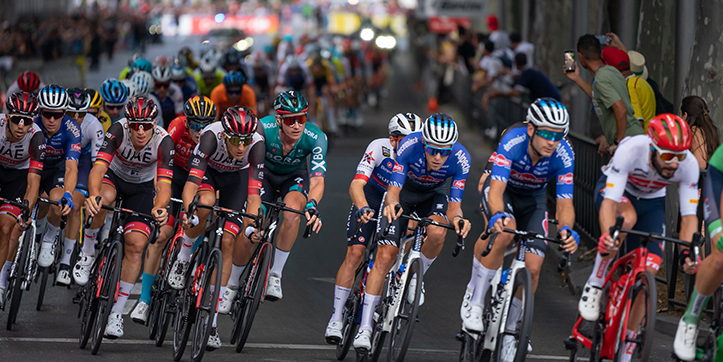

Vuelta a España starting peloton

Structure & Route: Ports, Power, and Prestige

Stage layout and setup of the Vuelta a España closely mirror the classic Grand Tour format: 21 stages over around 3,150 km, with two rest days interspersed.

While every Vuelta finishes in Madrid (since 1994), the starting point and mid-race sections can range widely, and sometimes even start abroad.

The stages alternate between long sprinter days, rolling hilly stages that suit breakaways or opportunists, high-mountain summit finishes (often in the Pyrenees or Cantabrians), and a few critical individual time trials, particularly decisive in General Classification standings.

Compared to the Tour de France, the Vuelta often leans into shorter but steeper climbs, with multiple summit finishes in a single week, favouring aggressive climbers and punchy riders who can explode and thrive over shorter distances.
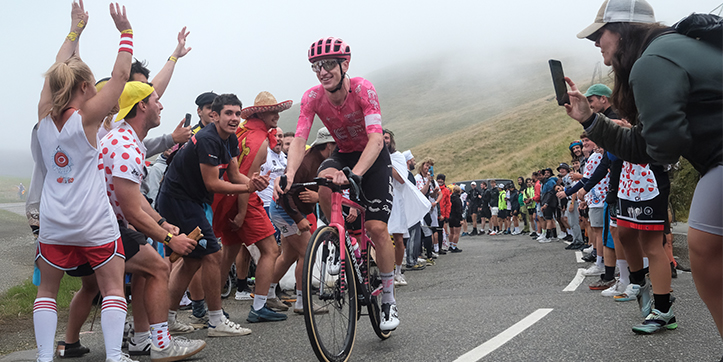

Vuelta a España mountain route

Teams & Riders: Who’s Racing the Vuelta?

Each edition of the Vuelta a España features a competitive mix of WorldTour powerhouses and ambitious wildcard teams, creating a dynamic peloton of riders with varied goals – from overall victory to stage wins and jersey battles.

Typically, 22 to 23 teams are invited to participate. These include all the UCI WorldTeams – the top-tier professional squads that are automatically qualified to compete in all Grand Tours – as well as a selection of UCI ProTeams (second-tier teams) that receive wildcard invitations from the race organizers.

Each team fields eight riders, resulting in a starting peloton of approximately 176 to 184 riders.

Some teams come with clear GC ambitions, supporting proven leaders and carefully managing every stage. Others build their strategy around stage hunting, fielding explosive riders who can seize opportunities in rolling terrain, mountain descents, or chaotic finales.

The Vuelta has long served as a platform for both established stars and emerging talent. Many riders use it to rebound from earlier-season injuries, to prepare for the UCI World Championships, or to confirm their readiness for future leadership roles in Grand Tours. It’s not uncommon for the Vuelta to reveal future champions – young riders who shine in mountain stages or hold their own in time trials, earning attention from bigger teams.
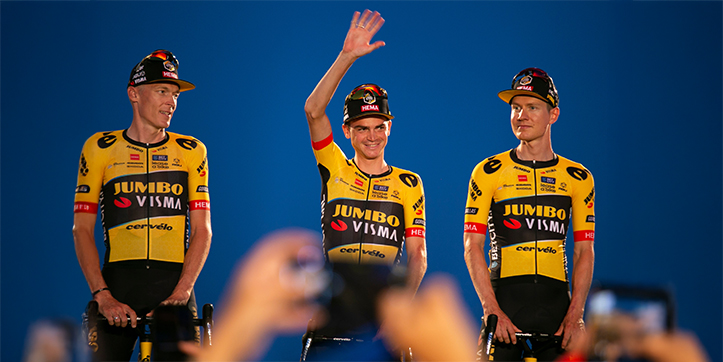

Vuelta a España professional teams

Jerseys, Classifications & Tactical Narratives

The Vuelta a España includes the same major classifications as other Grand Tours:

  • General Classification (GC): Rider with the lowest total time wears the red jersey.
  • Points Classification: Green jersey – often a sprint or breakaway rider target.
  • Mountains Classification: Blue-on-white polka-dot jersey for the best climber over categorized ascents.
  • Young Rider Classification: White jersey for the best under-26 GC rider.
  • Team Classification: Tracks aggregate time of the top three riders per team; there’s also a combativity award marked by a yellow number.

These classifications generate inner-battles: sprint teams chasing green points, climbers targeting KOM climbs, and teams protecting young talents or riding aggressively for breakaways.
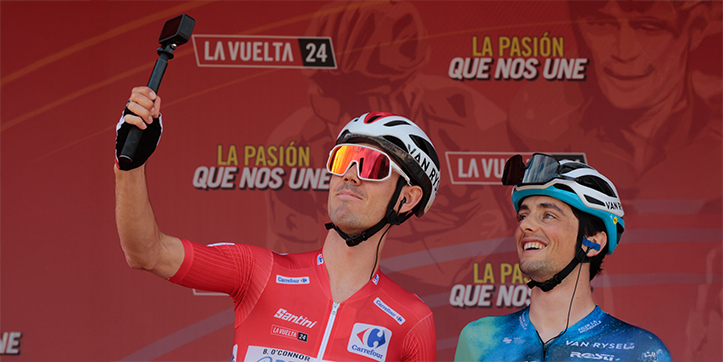

Vuelta a España jerseys

Strategy & Race Tactics: Anatomy of a GC Campaign

A team aiming for overall victory structures its entire strategy around its GC leader – a climber or strong time-trialist. That leader is protected by domestiques who shield from wind, pace in the mountains, chase down dangerous breakaways, and deliver support at feed zones.

Time trials can decide the race. For example, Primož Roglič famously recaptured the red jersey with a dominant time trial on the penultimate day of the 2024 edition to equal the record of four overall wins.

Aggressive riding in mountain stages – particularly those with summit finishes – is a hallmark of La Vuelta. Opportunists like Wout van Aert, while not GC threats, have delivered solo wins in hilly stages by attacking from a reduced peloton – a reminder of how variable the route can be.
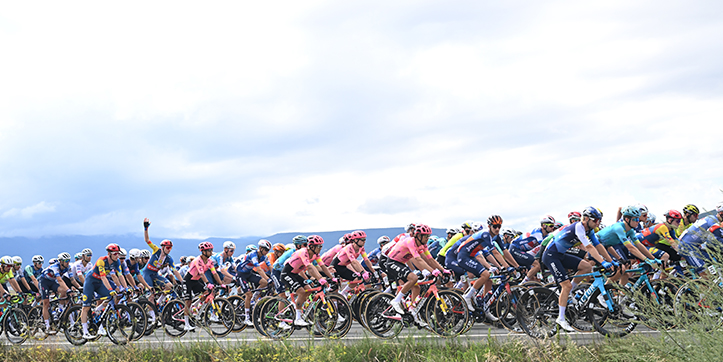

Vuelta a España peloton

Historical Highlights & Records: Legends of the Vuelta a España

  • Most overall wins (GC): Roberto Heras and Primož Roglič each have four Vuelta titles, the all-time record. Heras’s wins came in 2000, 2003, 2004, and 2005; Roglič’s in 2019, 2020, 2021, and again in 2024.
  • Three consecutive wins: Heras, Roglič and Tony Rominger held the General Classification title three times in a row.
  • Most stage wins ever: Delio Rodríguez holds the record with a staggering 39 stage victories between 1941 and 1947.
  • Most stage wins in a single edition: Freddy Maertens won an incredible 13 stages in the 1977 Vuelta.

Spain has produced the majority of Vuelta champions – 31 wins by nationality vs others – and has a deep tradition of winners, including Heras, Contador (3 wins), Valverde, Delgado, and Ocaña.


Legendary Vuelta riders

What Sets La Vuelta Apart for Avid Cyclists

1. Terrain and Timing

La Vuelta’s profile favours explosive climbers – think steep, punchy ascents that fall away quickly – rather than long alpine cols. The late-season scheduling also means riders often peak here or use it as form for the World Championships.

2. Storytelling and Narrative

The Vuelta a España often makes or breaks General Classification battles in sudden mountain stages or final-day time trials. Roglič’s 2024 comeback, reclaiming the jersey on stage 19 time trial, is emblematic – and as a Roccia-driven climber sprinted to dominance, it underscores how thin margins can shift the entire race.

3. Wildcards and Spanish teams

The presence of local wildcard teams like Burgos, Caja Rural, and Q36.5 adds unpredictable dynamics: stage hunters, regional favourites, and breakaway specialists all eager to animate the race – even if they don’t target GC.

4. Historic resonance and records

From Rodríguez’s 39 stage wins to Heras and Roglič’s quad-crowns, Vuelta encapsulates cycling lore. Delving into those numbers builds appreciation for the race’s heritage.
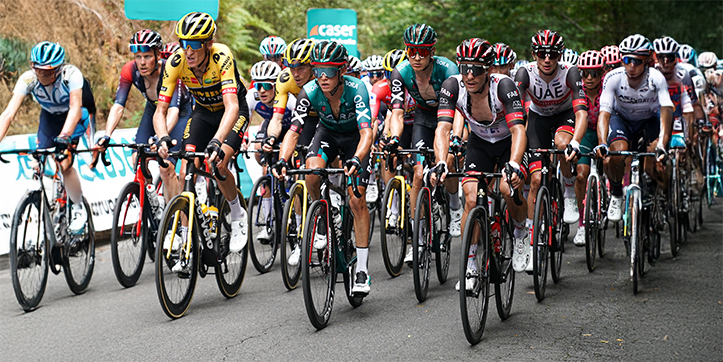

Vuelta race action

Fandom: The Ultimate Race Experience

For serious race followers, the Vuelta a España is a strategic feast:

  • Challenging GC tactics: With wildcards and breakaways at every turn, GC teams rarely ride control exclusively – opportunities abound.
  • Sprint and puncheur tension: Sprinters medal-green jerseys on fast finishes but can lose mountains early; puncheurs like van Aert and Jalabert have sneaked wins in rolling terrain.
  • Young talent emergence: White-kept riders push their limits for future greatness, making the race a showcase of rising stars.
  • Team diversity: With 22 teams, including up-and-coming squads, every stage brings surprise attacks and racing that defies the script.


Fans cheering during Vuelta a España

Conclusion: the Vuelta a España as Cycling’s Final Act

The Vuelta a España isn’t just a Grand Tour – it’s the season finale where form, strategy, and heart collide. The Spanish climbs are steep and often dramatic; the timing is perfect for riders to either make their big move or exact redemption. It’s where legends have emerged and where stage hunters can take the spotlight in breakaways across Spain’s diverse terrain.

From the start through to the finish in Madrid, the Vuelta demands attention. Whether you’re watching from the breaks, the mountain slopes, or the sofa at home, the storylines make the Vuelta a España a race like no other.

Road Cycling Race Categories Explained: A UK Rider’s Guide

You love cycling, you’re really fast and you’re thinking about competing? Understanding road cycling race categories in the UK, especially British Cycling race categories, is essential for every aspiring racer to get into the game. This guide explains how the system works, how to move up the categories, and how to plan your racing journey.

What Are Road Cycling Race Categories?

The road cycling race categories system in the UK is a structured, points-based ladder managed by British Cycling to ensure fair competition. Riders are grouped according to ability, not just age, and compete within their own category unless events combine levels. This structure helps to keep races competitive and safe, match riders to appropriate events and provide clear objectives for progression.

In road cycling, the categories range from 4th (entry level) to Elite (top tier). You’ll also see separate classifications by age and gender (e.g., Junior, Masters, Women’s categories).

This system is different from other disciplines like:

  • Track cycling – Velodrome-based racing with distinct events (e.g., pursuit, sprint) and its own ranking system.
  • Mountain biking (MTB) – Off-road events like cross-country (XC) and downhill (DH), using separate MTB categories and rankings.
  • Cyclocross & BMX – Short, technical circuits often raced off-road with discipline-specific licence points.

Each discipline under British Cycling has its own category structures and progression systems. Here, we’ll focus solely on road cycling race categories, where races take place on tarmac courses ranging from city criteriums to 100+ km open-road events.


Cyclists in different race categories

British Cycling Race Categories Explained

The Senior Category Ladder

British Cycling’s senior categories run from 4th to Elite and are for riders over 18. Here’s how riders move up:

  • 4th Category – Default for all new juniors or seniors, or riders with fewer than 12 points in a season. Day-license holders also race here.
  • 3rd Category – Earned by scoring 12 licence points in one season on a 4th cat licence; once promoted, there’s no downgrade.
  • 2nd Category – Requires 40 points in one season as a 3rd cat; to retain it, earn ≥25 points in 2nd-category events next season.
  • 1st Category – Achieved with 200 points in a season as a 2nd cat; to keep it, you need ≥100 points at that level.
  • Elite – Requires 300 points as a 1st or Elite rider during the previous season.


British Cycling race leaders

Age and Gender Categories

  • Age Categories in Road Cycling: Youth C-A are for under 16-year-old riders, 16-18 year-olds ride in the junior category, over 18-year olds are riding in the senior category and 30+ in the masters for age-based competitions.
  • Women’s Categories: Women also progress through the same 4th to Elite category ladder, but many races feature women-only fields to ensure safety and fair competition. Smaller events sometimes combine women’s races with men’s Cat 4 or 3 races when entry numbers are low. However, national level races will almost always offer dedicated women’s categories. The points, upgrades, and licence requirements are identical to the men’s category structure.


Man and woman road cycling

How Licence Points Work

Licence points are the currency of progression within British Cycling’s road race categories. Riders earn points based on their finishing position in sanctioned events, with higher-level races awarding more points to top finishers.

Events are graded according to their level: National A races offer the most points, followed by National B and then Regional A or C+ events. For example, winning a National A road race can earn a rider up to 100 points, while a Regional C+ race win might award 15 points.

Points are typically awarded to the top 10–20 finishers, with a sliding scale that rewards higher placings more heavily. To qualify for points, riders must hold a full British Cycling Race Licence (Silver or Gold membership); day licence holders are permitted to race but cannot accumulate licence points. All points earned count toward a rider’s category upgrade within a single season, which runs from 1 January to 30 November.

At the end of the season, British Cycling resets points totals, and riders are reclassified based on their achievements – although some categories, like 3rd Cat, are retained indefinitely once earned.


Cycling race finish line awarding points

How to Progress Through the Categories

Progression through the British Cycling road race categories is based on the accumulation of licence points during a single season.

All new riders aged 18 or over begin as 4th Category racers, the entry level for Seniors, and must earn at least 12 points within the season to move up to 3rd Category.

Once in 3rd Category, riders are not downgraded if they fail to score points in future seasons, meaning they retain their category indefinitely.

To advance to 2nd Category, riders must accumulate 40 points in one season, and for promotion to 1st Category, they need 200 points. The highest level, Elite Category, requires achieving 300 points within a season, a level typically reached only by riders competing successfully in National or international events.

Points can only be earned in events open to a rider’s current category or higher, and because upgrades happen during the season as points thresholds are reached, it’s possible to be promoted mid-year and immediately race in higher-category fields.

At the end of the season, all points totals reset, except for certain categories like 3rd Cat and above where demotion does not automatically occur unless specifically requested by the rider.


Cyclist progression through categories

Why Road Cycling Categories Matter

  • Fairness & development: Newer or less experienced riders race with similar ability, ensuring safety and competitive racing.
  • Clear progression: Categories give riders ongoing motivation and goals.
  • Logistics: Organisers use categories to structure races and prize tiers effectively.


Cyclists in competitive peloton

6 Tips for New Racers Entering Their First Cat 4 Race

  1. Obtain a British Cycling Licence – Aim for a Full Racing Licence (Gold or Silver) to qualify for points. Day licences are only valid for Cat 4.
  2. Pick beginner-friendly races – Choose well-organised crits or short road races for your initial events.
  3. Join a cycling club – Many clubs offer beginners’ groups and race support.
  4. Focus on race skills – Cornering, pack positioning, and break tactics are often more important than raw power.
  5. Set a goal to upgrade – For Cat 3, aim for more than 12 points (e.g. two top-5s).
  6. Manage expectations – You may get dropped. It’s part of progression. Learn and build confidence with experience.


FAQs: British Cycling Race Categories

Q: Do I need a licence to race Cat 4?
Yes. To gain points you must hold a Full Racing Licence (Silver/Gold). Day licences let you race but won’t earn points.

Q: Can I downgrade if I stop racing?
Officially, no. However, lapses in membership may falsely reset your category. With an absence of several years, you might return as Cat 4 or 3.

Q: Are women in separate categories?
Yes. Women race within the same four-level system (Cat 4 to Elite), but many events use women-specific fields or adjust event tiers accordingly.

Q: How long does the upgrade take?
To upgrade from Cat 4 to Cat 3 you need 12 points. If you win, you can reach these as fast as in two races.
To upgrade from Cat 3 to Cat 2 and above is more challenging. It depends on consistent performance across multiple events.
The ladder progression is annual, with reclassification based on calendar-year points.

Final Thoughts & Getting Started

Understanding road cycling race categories, especially within the British Cycling race categories system, gives riders confidence and clarity. Here’s a quick recap:

  • Cat 4 is where everyone starts; 12 points gets you to Cat 3
  • From Cat 3 → 2 requires more consistent success (40 points)
  • Cat 2 → 1 and 1 → Elite need growing performance and grit

Every finish, sprint, and breakaway moves you closer. So get licensed, join races, learn from every outing, and aim to earn those first 12 points!

Join our weekly rides where you can push your limits and meet like-minded riders.

Happy Cycling!