How Does the Tour de France Work? A Beginner’s Guide to Cycling’s Greatest Race

Every July, cyclists from around the world saddle up to do the unthinkable: ride thousands of kilometers, up and down mountains, across cobblestones, through all types of weather – and somehow, smile for the cameras while doing it. This is the Tour de France, and it’s one of the most legendary (and let’s be honest, slightly bonkers) sporting events on the planet.

But if you’re not already fluent in pelotons, time bonuses, and jerseys with polka dots, the Tour can feel like a confusing blur of bikes and French villages. So let’s break it down: what is this race, how does the Tour de France work, and why do people voluntarily suffer through it?

What Is the Tour de France?

The Tour de France is the world’s most famous cycling race: a three-week epic held every summer since 1903 (minus a few breaks – check out “The history of the Tour de France” if you want to know more). But it’s not just a race. It’s a cultural phenomenon, a strategy game on wheels, and possibly the only sport where eating more than 5000 calories per stage is not only allowed but necessary.

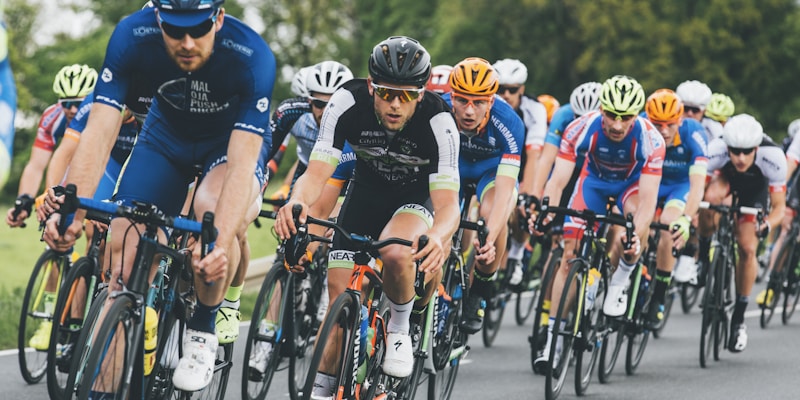
Tour de France Peloton

The race usually lasts 23 days, with 21 racing stages and two rest days – which, for some riders, still involve a “recovery” ride of 100km. Casual.

The total distance is around 3,000 to 3,500 kilometers (that’s about 2,000 miles), depending on the year’s route. That’s like cycling from London to Rome… and then deciding to take a scenic detour through the Alps just for fun.

How does the structure of the Tour de France work?

The Tour is split into 21 stages, and each one plays a different role in shaping the overall race.

Mountain Stage Tour de France

The different types of stages give the Tour de France the character that turns it into one of the most challenging cycling races.

  • Flat stages: Designed for sprinters. These are the fast and furious days where speeds can hit 70 km/h and victory is often decided by a millimeter.
  • Mountain stages: These are the big leg-breakers. Long climbs in the Alps or Pyrenees where riders either ascend to glory or question all their life choices.
  • Time trials: Also called “the race of truth,” this is where cyclists go solo against the clock. No drafting. No excuses. Just one man (or woman) and their legs, screaming.
  • Rest days: Ironically, still not very restful as riders often do a casual ride of 100+km to keep the momentum.

Each day has its own winner, but the big goal is the General Classification (GC) (we’ll get to that in a moment).

And yes, the route changes every year, but the Tour always finishes in Paris, typically with a champagne-sipping procession into the Champs-Élysées. Because nothing says “I’ve suffered for 3,000 kilometers” like a well-earned toast.

Teams and Tactics (Yes, It’s Not Just Pedaling)

While the yellow jersey is awarded to an individual, cycling is very much a team sport. Each of the 22 teams in the Tour de France brings 8 riders, each with their own role.

Cycling Team Strategy

There’s:

  • The team leader, aiming to win the Tour.
  • Climbers, who shoot up mountains like they’re running from gravity itself.
  • Sprinters, who go from zero to warp speed in the final 200 meters.
  • Domestiques (French for “servants”), who fetch water bottles, set the pace, and literally sacrifice their race for the leader.

Often the focus is on the team leader going after the yellow jersey. But they wouldn’t be able to do it without the help of their team.

What’s With All the Jerseys?

Yes. The jerseys. We mentioned a couple already. Not just a fashion statement – though frankly, more sports should embrace polka dots – each special jersey represents a different competition within the race:

  • Yellow Jersey (Maillot Jaune): Worn by the rider with the lowest overall time. Basically, the race leader.
  • Green Jersey: Awarded to the best sprinter – the one racking up points in flat stage finishes and intermediate sprints.
  • Polka Dot Jersey: For the King of the Mountains. You earn points by reaching the top of climbs first.
  • White Jersey: Best young rider under 26. Like Rookie of the Year, but with 10% more lactic acid.

Tour de France Jerseys

Jerseys can change hands daily. You could be in yellow one day and off the podium the next. That makes each day of the Tour de France so exciting.

How Do You Win the Tour de France?

Now here’s the twist: you don’t actually have to win any stages to win the Tour.

Yep – the General Classification (GC) is based on your total time across all stages. So, if you’re consistently fast (and smart), and avoid major time losses in mountain stages or time trials, you can end up in yellow without ever being first across a single finish line.

Still, many riders go all-in for:

  • Stage wins (huge for their career and team).
  • Points classification (green jersey).
  • Mountain classification (polka dots).
  • Young rider classification (white jersey).

How Do the Tour de France Teams Work?

Let’s take a moment to appreciate the most underrated athletes in the Tour: the domestiques. These are the loyal workhorses who spend hours at the front of the peloton, shielding their leader from the wind, chasing down breakaways, and handing over their bikes if something breaks.

Domestique helping team leader

Tactics matter too. Knowing when to attack, when to draft, when to save energy – it’s like chess on wheels. Only in chess, no one’s pedaling uphill for four hours in 35°C heat while dodging cows and selfie sticks.

Why Is the Tour So Hard (and So Loved)?

The Tour isn’t just hard. It’s ludicrously hard. Imagine doing back-to-back marathons – on a bike – for three weeks straight. Riders burn around 5,000-7,000 calories a day, suffer crashes, dehydration, altitude sickness, and sometimes even rogue spectators.


And yet… it’s glorious.

There’s something magical about how the Tour de France works. The landscapes, the rivalries, the sheer human drama of it all. Watching someone climb the Col du Tourmalet, face twisted in pain, fans screaming in their ears, knowing they still have two more mountain stages to go – that’s the kind of madness that inspires.

Plus, there’s a certain joy in seeing someone eat an entire baguette mid-ride and then go drop the entire peloton.

Fun Facts That Impress

The longest Tour de France ever was in 1926, clocking in at 5,745 km. 

The youngest winner? Henri Cornet, who won in 1904 at the age of 19.

The record for most wins is five – shared by legends like Eddy Merckx, Bernard Hinault, Miguel Indurain, and Jacques Anquetil.

Yes, riders do eat during the race: bars, gels, sandwiches, rice cakes, even Coca-Cola. The Tour is basically one long rolling picnic, but with fewer nap breaks.

Conclusion: It’s Complicated, Beautiful, and Worth Watching

Here is how the Tour de France works: it’s chaotic, epic, sometimes ridiculous, and always inspiring. It combines strategy, teamwork, endurance, and a healthy dose of unpredictability.

Whether you’re a hardcore cycling fan or someone who just wants to know why that guy in yellow looks so smug, the Tour offers something for everyone. And who knows? After a few stages, you might even find yourself shouting “Allez! Allez!” at your screen while Googling how to participate in a local cycling event (for mortals).

Just remember: you don’t need to ride 3,000 km to be part of the fun. But if you do, maybe bring snacks.

How to Train for Land’s End to John o’ Groats

So, you’re eyeing up the big one: Land’s End to John o’ Groats (LEJOG). Bottom to top. Coast to coast. 1,000+ miles of rolling hills, unpredictable weather, and endless stories to tell your grandkids. And you want to do it in 10-14 days? Ambitious, yes. Impossible? Absolutely not.

Here’s how to train for Land’s End to John o’ Groats that averages 70-100+ miles a day without turning into a broken shell of your former self.

How to Train for LEJOG

How Fit Do You Need to Be for LEJOG?

Let’s not sugarcoat it: riding LEJOG in 10 to 14 days is no holiday cruise. You’ll be in the saddle for 6 to 8 hours a day, burning thousands of calories and pushing through sore legs, wind, and possibly the odd existential crisis. You need endurance, resilience, and a decent tolerance for soggy socks.

But don’t let that scare you off. This isn’t the Tour de France. With consistent, focused training, and the right mindset, it’s entirely doable. Many cyclists with day jobs and families have completed it and lived to tell the tale (some even with a smile).


Why Should You Train for Land’s End to John O’Groats?

Preparing for a ride like Land’s End to John o’ Groats isn’t just about ticking off miles on your GPS. It’s about getting your body (and backside) ready for back-to-back days in the saddle.

Spending time on your bike before the big ride helps your muscles adapt to the strain, improves your cardiovascular endurance, and crucially, gets you used to sitting on your saddle for hours at a time. Spoiler alert: your first few long rides may come with a side of numb bum, but it gets better.

Consistent training also helps you dial in your setup – tweaking saddle height, handlebar position, and gear choices – so you’re not discovering aches and pains halfway through Cornwall. Basically, the more prepared you are, the more you’ll enjoy the ride (and the fewer dramatic sighs you’ll heave every time you see a hill).

Cyclist checking their bike

How to Train for a 10-14 Day LEJOG: The Essentials

Start by building a solid aerobic base. You’ll want your heart and lungs cruising comfortably for long periods. Time in the saddle is your golden metric. Don’t get too obsessed with speed or watts – focus on endurance and comfort.

Key elements to include:

  • Consistency over time: Aim for at least 4 rides a week.
  • Back-to-back long rides: Your legs need to know what day-after-day fatigue feels like.
  • Hills and intervals: Sprinkle in intensity. Cornwall won’t climb itself.
  • Strength training: Squats, lunges, and core work will keep you solid in the saddle.
  • Stretching and mobility: Because riding with hamstrings like piano wires is no fun.

How to Train for Land's End to John o' Groats indoors

Sample Week: Intermediate to Advanced Cyclist

Here’s what a typical week might look like a couple of months out from your ride:

  • Monday – Rest or gentle yoga/stretching
  • Tuesday – Intervals or hill repeats (1.5 hrs)
  • Wednesday – Zone 2 endurance ride (90 min)
  • Thursday – Tempo ride (2-3 hrs with sustained effort)
  • Friday – Rest or short recovery spin (1 hr)
  • Saturday – Long ride (build up to 100-120 km with loaded bike if possible)
  • Sunday – Medium-long ride (3-5 hrs, ride on tired legs)

Every 3-4 weeks, reduce volume for a recovery week. You’re building, not burning out.

enjoying cycling and stay motivated

Train Like You Mean It (and Like You’ll Actually Ride)

Don’t just train for distance. Train for the reality of LEJOG: unpredictable weather, loaded bikes, and long days. Get out there in the drizzle. Practice riding with your panniers or saddlebag. Break in your shorts and your chamois cream strategy (don’t leave that discovery for Day 2 of your ride).

Fuel like it’s real too. Try out different snacks and hydration strategies. What goes down easy at mile 30 may not sit so well at mile 90. Find your sweet spot between energy balls and jelly babies.

And yes, ride tired. Ride when you’d rather be watching Netflix. That’s where the magic happens.

Cyclist in the mountains

Tapering Off and Prepping Up

About 7-10 days before your LEJOG adventure, it’s time to taper. Cut back on volume but keep a touch of intensity to stay sharp. Don’t do any new or heroic rides during this time. No last-minute Everestings, please.

Your biggest back-to-back rides should be 2-3 weeks out, something like 3 consecutive 80-100 km rides. These are your dress rehearsals. If something squeaks, chafes, or fails, better to discover it now than on Day One in Cornwall.

Bonus Tips How to Keep Training for Land’s End to John o’Groats

  • Recovery is king: Sleep, stretch, and eat well.
  • Dial in comfort: Small saddle or shoe issues become big problems fast.
  • Ride with your kit: Especially if you’ll be carrying bags.
  • Track progress: Use a cycling app to stay motivated and see gains.


Bike Prep & Kit Tips

When it comes to preparing your bike and kit for a 10-14 day LEJOG adventure, comfort beats lightweight gear every time.

A well-fitted bike with a comfy saddle will do more for your endurance than shaving off a few grams with carbon this-or-that. Invest in key essentials like padded shorts (your future self will thank you, promised), a decent saddle, reliable lights, and proper waterproof layers – you’re riding in Britain, after all.

It’s also worth brushing up on basic bike maintenance: knowing how to fix a puncture, or adjust your brakes can be the difference between a minor hiccup and a full-on meltdown in the middle of nowhere.

We highly recommend getting your bike serviced about a week before your ride. This ensures your bike is in top condition and your “machine” doesn’t work against you with rusty chains and knackered tyres.

And remember, more saddle time is far more valuable than fancy upgrades – ride more, faff less.

Bike maintenance to train for land's end to john o'groats

Final Thoughts + The All-Important Call to Adventure

How to train for Land’s End to John o’ Groats isn’t just about physical preparation. It’s about building mental grit, finding joy in long rides, and learning how your body works best under pressure. Some days you’ll feel like a machine. Other days, you’ll bond with your inner sloth. Both are fine. Keep pedalling.

If you fancy a LEJOG ride in a supportive team, sign up to TEAMMC’s Land’s End to John o’Groats adventure. We handle the logistics and your luggage so you can focus on the cycling, the scenery, and the café stops. Let’s make those 1,000 miles your greatest ride yet.

🚴‍♂️ Happy Cycling! 🚴‍♀️

Tour de France History: Grit, Gears, and Glory on Two Wheels

The Tour de France. Even if you don’t ride a bike, you’ve probably heard of it. A swirl of spandex, sweat, and spectacular scenery. It’s more than just a race. It’s a saga of drama, defiance, and excitement. So, what makes the Tour de France such a big deal? Let’s take a deep dive into Tour de France history and see why this two-wheeled epic continues to captivate millions each year.

How It Started

The history of the Tour de France starts not with a bicycle, but with a newspaper. Back in 1903, a struggling French sports daily called L’Auto (yes, ironically named given the pedal-powered focus) decided to stage a bike race around France to boost circulation. The editor, Henri Desgrange, didn’t quite realise he was inventing what would become the world’s most prestigious cycling event.

The first Tour was no picnic. Six stages, over 2,400 kilometres, and zero carbon fibre. Riders braved unpaved roads, often riding through the night, sometimes stopping for wine and cheese. Maurice Garin, a chimney sweep by trade, took the inaugural yellow jersey, forever etching his name in Tour de France history.

Vintage bicycle representing early Tour de France era

The Tour de France History: From Grit to Glory

The Tour de France wasn’t born glamorous. The early Tours were as much a test of character as physical ability. Drafting behind cars, hopping on trains, or sneaking a tow – cheating was practically a sub-discipline. Riders had to be their own mechanics, medics, and motivational speakers. Yet somehow, the race endured – and legend after legend was born.

The 1930s

By the 1930s, things got a bit more organised. National teams replaced trade teams, and support vehicles were introduced. That meant riders could finally focus more on racing and less on whether their wheel would fall off.

increase popularity of tour de france

No Races During the World Wars

Of course, there were years when the Tour didn’t roll at all. World War I (1915–1918) and World War II (1940–1946) brought the race to a halt. But even war couldn’t kill the spirit of the Tour. In fact, the post-war editions were symbolic of national recovery. The 1947 race, won by Jean Robic became a fan favourite. Robic, known for his bird-like build and relentless grit, famously carried a bottle of rum on his bike. Because electrolytes are overrated, apparently.

Cyclist climbing mountain representing legendary Tour climbers

The Early Hype

The 1950s and ’60s saw the rise of greats like Fausto Coppi and Louison Bobet, before the machine-like precision of Jacques Anquetil took over. Anquetil was the master of the time trial, emotionless and calculated. His dominance set the stage for an even bigger force: Belgium’s Eddy Merckx. “The Cannibal,” as he was dubbed, didn’t just win – he devoured. In 1969, he won the general classification, points classification, and mountains classification all in the same year. Absolutely legendary!

History of the tour de france

Technological Revolutions in the 1980s

From the 1980s onward, the Tour shifted gears again – both figuratively and literally. Technological advancements changed the game: indexed gears, lighter frames, aero helmets.

1985 was the last year a Frenchman won the Tour: Bernard Hinault, who combined Anquetil’s ruthlessness with Merckx’s aggression. Hinault wasn’t afraid of the peloton – or protesters. In 1984, he famously punched a striking dock worker who tried to block the race. Vive la Résistance.

American Greg LeMond shook up the old guard in 1986 by becoming the first non-European to win. He later clinched the 1989 Tour using aerobars in a time trial, beating Laurent Fignon by just 8 seconds – the closest margin in Tour history. Suddenly, tech and tactics mattered as much as raw power.

Cyclist racing representing the Armstrong era and scandals

Mainstream Popularity & Scandals

The 1990s and early 2000s saw the sport enter both its most watched and most controversial era. The Lance Armstrong years brought in millions of new fans – but later turned sour with revelations of systematic doping. From the Festina Affair in 1998 to Armstrong’s eventual lifetime ban, the Tour hit rock bottom. But it didn’t stay there. The fallout led to stricter testing, biological passports, and a generation of riders determined to prove the sport could rise again.

Tour de France history: peloton racing through countryside

21st Century Diversity and Expansion

And rise it has. The 2010s brought new talent and parity. Teams like Sky (now INEOS Grenadiers) introduced a scientific, data-driven approach. Meanwhile, riders from Colombia, Australia, and Slovenia began to dominate the General Classification. The Tour got younger and faster, and by 2019, Egan Bernal became the first South American to win the yellow jersey.

The new guard is thrilling to watch. Tadej Pogačar, the Slovenian phenom, has brought flair, aggression, and the energy of a teenager who forgot to check the breakaway list. Jonas Vingegaard, his calm and calculating rival, makes every climb look like a spreadsheet playing out in real time.

Technology, too, continues to evolve. Carbon bikes now weigh less than a decent baguette. Power meters guide every pedal stroke. Riders train on virtual platforms like Zwift, which is basically Mario Kart but with Lycra and FTP zones.

Tour de France Femmes

And we can’t talk about progress without mentioning the return of the Tour de France Femmes avec Zwift. The Tour de France Féminin originally ran in the 1980s but struggled for support. After years of underrepresentation, women’s cycling finally received the platform it deserves. Under the banner Tour de France Femmes avec Zwift, the 2022 race was a smash hit – both in viewership and competitive excitement – marking a bold new era for the sport.

So yes, the Tour de France has changed throughout its history. From patched-up tyres and rogue train rides to GPS-guided watts-per-kilo warfare, it’s come a long way. But at its heart, the Tour de France remains what it always was: a test of human spirit, resilience, and the joy of the open road. And a good excuse to yell at the TV in July.

Cyclist enjoying the road representing the spirit of cycling

Final Thoughts: Why We Keep Watching (and Riding)

So, what makes the Tour de France history so special? It’s not just the jerseys, the climbs, or even the crashes. It’s the mythic nature of the event – the idea that anyone, on two wheels and a ton of willpower, can do something extraordinary.

Sure, most of us will never race the Tour. But we can chase our own cycling goals, whether it’s conquering a local hill or doing our own multi-day tour (with significantly more café stops). The Tour inspires us to get out there, clip in, and embrace the madness – one pedal stroke at a time.

Feeling inspired?

At TEAMMC Cycles, we’re all about helping everyday riders feel like legends. Whether you need a service, a kit upgrade, or a ride to challenge yourself – check out our events and get Tour-de-France-ready (minus the helicopters and hotel transfers). The road awaits!

🚴‍♂️ Happy Cycling! 🚴‍♀️

Coffee vs Energy Drinks: Which One Enhances Your Performance?

As a cycle café we are seriously into coffee. And as avid cyclists we are seriously into performance. And many of our fellow riding companions are into energy drinks. Both, coffee and energy drinks, are hoping for the same thing – to improve performance on the ride ahead. But the question remains: coffee vs energy drinks, which one actually works better for cyclists?

Let’s unpack the differences, look at the science, and find out why the ritual of pre-ride coffee isn’t just a habit – it might actually be smart. We’ll also throw in a bit about why our TEAMMC Cycles café in Whitechapel might just be the best place to start (or end) your ride *wink*.

Coffee cup and energy drink comparison

What’s in the Can vs What’s in the Cup?

When deciding between coffee vs energy drinks, it helps to understand what you’re putting into your body.

Most standard energy drinks like Red Bull, Monster, or Rockstar contain between 80-160mg of caffeine per can, while a typical espresso clocks in at about 63mg. A strong brewed coffee? Around 90-120mg per cup. But it’s not just about caffeine quantity – it’s also about the company it keeps.

Coffee is naturally rich in antioxidants and free of additives if you skip the syrups and cream. Energy drinks often contain synthetic caffeine, sugar, artificial sweeteners, and other ingredients like taurine and guarana, which may amplify or prolong the caffeine effect, but can also come with jittery side effects.

So when comparing the amount of caffeine in coffee vs energy drinks, you’re looking at different delivery methods. Coffee offers a smoother, slower release, while energy drinks often have a sharp spike.

Curious about the difference between coffee and energy drinks? Think of it like riding a fixie vs an e-bike: both will move you, but in very different ways.

Cyclist performance during ride

Is Coffee Better Than Energy Drinks for Performance?

Now we’re getting to the fun bit. Is coffee better than energy drinks when it comes to improving your cycling performance?

Several studies suggest that moderate caffeine intake – whether from coffee or energy drinks – can enhance performance by improving focus, reducing perceived exertion, and increasing muscle efficiency. But here’s the twist: the source of caffeine matters.

Coffee, when consumed about 30-60 minutes before a ride, improves stamina and sharpens concentration. Cyclists often report that it helps them get “in the zone” without the unpleasant buzz of synthetic boosters. Energy drinks, on the other hand, can work faster due to sugar content and added stimulants, but may also lead to energy crashes or digestive discomfort.

If you’re someone, coffee and energy drinks don’t work for, it might be worth experimenting with timing, dosage, or even the type of caffeine you consume. Everyone metabolises caffeine differently.

Morning coffee routine and digestion

Do Energy Drinks Make You Poop Like Coffee?

Let’s address the (toilet) elephant in the room. We’ve all joked about it, but does science back up the idea that coffee gets things moving in the gut? Turns out, yes. Coffee stimulates the muscles in your colon and can trigger a gastrocolic reflex, especially in the morning.

But do energy drinks make you poop like coffee? Not quite. While they contain caffeine, they lack some of the other natural compounds found in coffee that stimulate digestion. So, if you’re planning a long countryside ride, maybe test your timing with that espresso.

Energy drinks and coffee health comparison

Are Energy Drinks Stronger or Healthier Than Coffee?

You wonder if energy drinks are stronger than coffee? In terms of caffeine, sometimes yes. But strength isn’t everything.

What you really want is sustained energy without the side effects. Energy drinks often contain high levels of sugar, artificial flavours, and preservatives – and while they can deliver a quick hit of stimulation, that’s often followed by a hard crash. The high sugar content can cause a spike in blood glucose, which might make you feel supercharged for a short while, but once insulin kicks in, energy levels tend to plummet. That’s when the dreaded post-energy drink slump hits, leaving you more fatigued than before.

Consuming excessive sugary drinks regularly can lead to longer-term health issues like insulin resistance, weight gain, and even increased risk of type 2 diabetes. As for preservatives and artificial flavours, these aren’t just unnecessary – some can cause digestive upset, headaches, or trigger sensitivities in certain people.

In contrast, coffee – especially when taken black or with minimal additives – offers a more balanced and natural energy enhancer. It provides the same performance benefits from caffeine, but without the sugar-laden rollercoaster. Plus, coffee is rich in antioxidants and has been linked to various health benefits, from improved brain function to a reduced risk of certain diseases.

So are energy drinks healthier than coffee? Unless you’re loading your mug with whipped cream and syrups, coffee wins by a long shot. Its antioxidants, anti-inflammatory properties, and links to heart and brain health are well-documented.

Coffee vs energy drinks

How Many Cups of Coffee Are in an Energy Drink?

A standard energy drink often contains the equivalent caffeine of about one cup of strong coffee, sometimes a little more, depending on the brand.

But here’s the catch: coffee lets you control the dosage and additives. With energy drinks, you’re often getting a pre-packaged cocktail of ingredients you might not need or want. For cyclists trying to fine-tune their performance, that control matters.

Cyclist enjoying coffee after ride

Final Verdict: Coffee vs Energy Drinks

When it comes to coffee vs energy drinks, coffee generally offers a more stable and health-conscious way to improve energy and sharpen focus before or during a ride. That’s not to say energy drinks don’t have their place – they can be handy for those who don’t like coffee or want something cold and quick.

But for most riders looking to improve performance without the crash, a simple, well-timed brew does the trick.

Cycle café interior

Fuel Your Ride at TEAMMC Cycles

If you’re ready to test the power of a great cup of coffee for yourself, drop by our cycle café in Whitechapel. We serve all the classics, from flat whites, espressos to lattes – plus our signature chai and karak coffee, a spiced, sweet pick-me-up that packs a punch.

Whether you’re fuelling up before a ride or warming down after one, you’ll find community, conversation, and the best brews in London. And the best part? All profits go to charity.

Come for the coffee. Stay for the ride.

🚴‍♂️ Happy Cycling! 🚴‍♀️